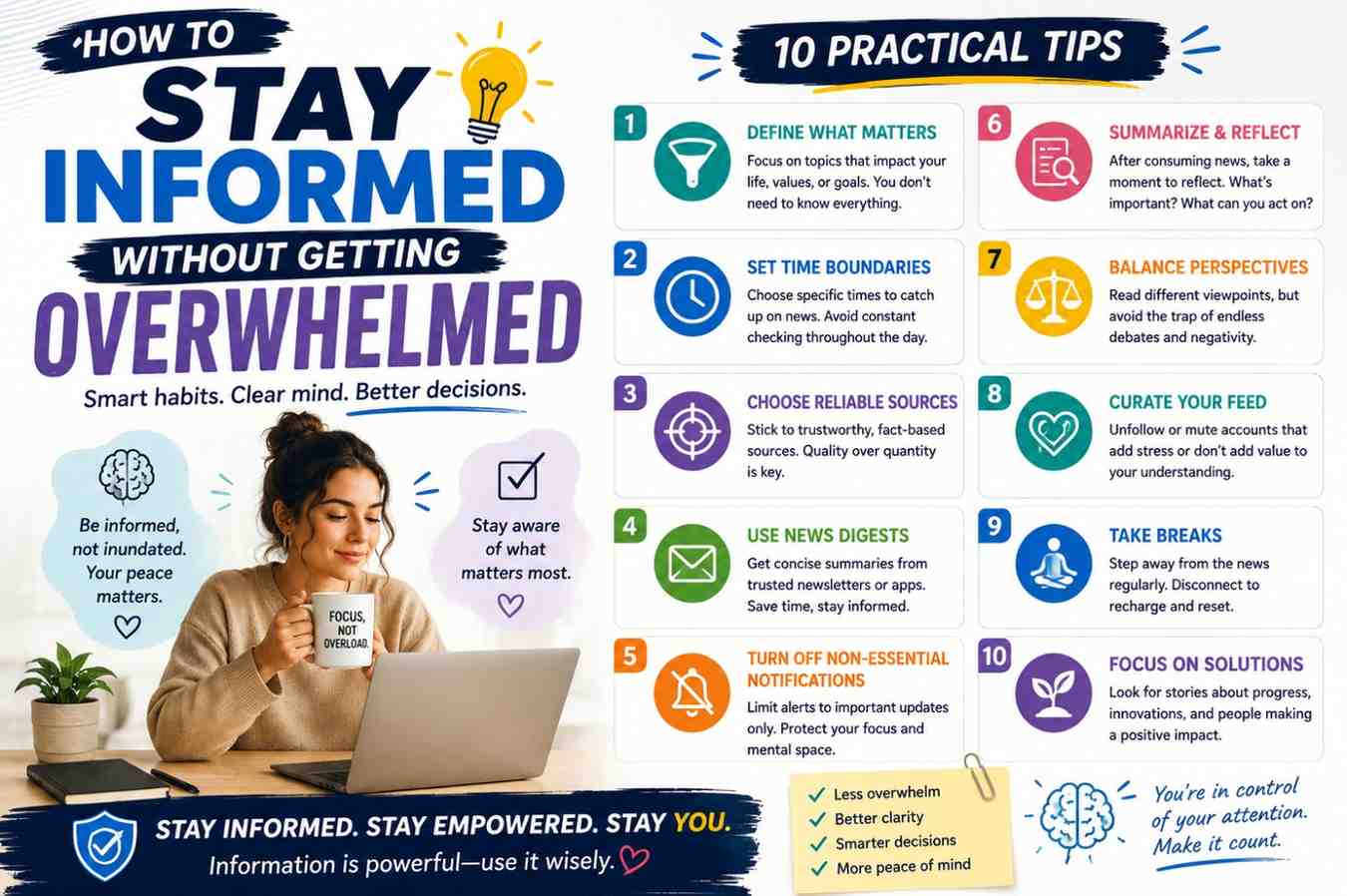

How to Stay Informed Without Getting Overwhelmed
In today’s hyper-connected world, information is available 24/7 from news platforms, social media, messaging apps, and countless digital sources. While this constant access to information can be empowering, it also creates a challenge of information overload, where the mind becomes overwhelmed by too many updates, opinions, and notifications at once. Over time, this can lead to stress, reduced focus, and mental fatigue, making it harder to process information effectively.
The key is not to avoid information completely, but to build a healthier and more intentional relationship with it. By learning how to filter what you consume and when you consume it, you can stay informed without feeling mentally drained. This involves setting boundaries, choosing reliable sources, and creating structured habits around media consumption so that information serves you instead of controlling your attention.
Developing this balance also improves overall productivity and emotional well-being. When you are in control of your information flow, you can focus better on meaningful tasks, make clearer decisions, and reduce unnecessary anxiety caused by constant updates. In the long run, this approach helps you stay informed in a calm, focused, and sustainable way.
Understanding Information Overload and Its Impact
Information overload is a modern cognitive challenge that occurs when the amount of information we receive exceeds our ability to process it effectively. In today’s digital world, where smartphones, social media platforms, and 24-hour news cycles are constantly active, people are exposed to far more data than the brain can comfortably organize and understand. This creates mental pressure, reduces clarity, and makes it difficult to focus on what truly matters.
When information overload occurs, the mind struggles to filter important details from unnecessary noise. Instead of gaining useful knowledge, individuals often feel confused, distracted, or mentally exhausted. This can affect decision-making, reduce productivity, and make it harder to retain meaningful insights from the information being consumed.
What Is Information Overload?
Information overload refers to a mental state where excessive exposure to information makes it difficult to process, understand, or retain knowledge effectively. When too many inputs come from different sources at the same time—such as news apps, emails, social media feeds, and notifications—the brain becomes overwhelmed and loses its ability to focus clearly.
In everyday life, this often appears as repeatedly reading headlines without fully understanding them or feeling mentally drained after just a few minutes of scrolling. Over time, this constant exposure reduces concentration, weakens memory retention, and makes it harder to prioritize important tasks or decisions.
Why Modern Digital Platforms Increase Overload
Modern digital platforms significantly increase information overload because they are designed to maximize engagement rather than mental well-being. Algorithms continuously push trending topics, emotional content, and frequent updates to keep users active on the platform. While this increases screen time, it also floods users with excessive and often unnecessary information.
Additionally, constant notifications and real-time updates create a cycle of interruption and distraction. Without proper control or filtering, users are repeatedly exposed to repetitive or irrelevant content, making it difficult to distinguish between important information and digital noise. This leads to mental fatigue and reduced focus.
| Information Overload Trigger | Impact on User Behavior | Effective Solution | Real-World Application |
|---|---|---|---|
| Constant news notifications | Creates distraction and anxiety loops | Turn off non-essential notifications | Disable alerts from news apps except emergencies |
| Infinite social media scrolling | Reduces focus and increases fatigue | Set time limits for app usage | Use screen time controls (30–45 min/day max) |
| Multiple conflicting news sources | Causes confusion and distrust | Use 2–3 trusted platforms only | Rely on BBC News or Google News |
| Breaking news culture | Triggers emotional stress | Check news at fixed times only | Morning/evening scheduled reading |
| Algorithm-based content feeds | Overloads irrelevant information | Use curated or RSS-based feeds | Subscribe only to selected topics via RSS |
Psychological Effects of Constant News Exposure
Continuous exposure to news and digital content can have a strong impact on mental health, often leading to stress, anxiety, and emotional exhaustion. One common effect is “news anxiety,” where individuals feel overwhelmed or stressed due to constant exposure to negative or alarming information.
Over time, excessive information intake can also reduce attention span and create decision fatigue, where even simple choices feel mentally draining. When the brain does not get enough time to rest and process information, clarity and focus decline, making it essential to manage information consumption carefully for better emotional balance.
Building a Mindful News Consumption Habit
A mindful approach to news consumption means intentionally choosing what you pay attention to instead of reacting to every notification or headline. In a digital environment filled with constant updates, this habit helps you regain control over your attention and reduce mental clutter. By being selective and intentional, you can stay informed without feeling overwhelmed or distracted.
Building this habit is not about avoiding news altogether, but about creating a balanced system where information serves a purpose. When you consciously decide what to read, when to read it, and how much time to spend, you develop a healthier relationship with digital content. Over time, this improves focus, emotional stability, and overall productivity.
Choose Reliable and Limited News Sources
One of the most effective ways to stay mindful is to limit your news sources to a few trusted platforms. Instead of switching between multiple apps or websites, selecting two or three reliable sources helps reduce repetition and confusion. This also ensures that the information you consume is more consistent and less fragmented.
Trusted outlets such as BBC News or similar reputable platforms provide structured and balanced reporting compared to the fast-moving and often unverified updates found on social media. By narrowing your sources, you reduce noise and improve the quality of information you receive.
Avoid Endless Scrolling Behavior
Endless scrolling is one of the main causes of information overload because it encourages passive and uncontrolled consumption. Without time limits, users can easily spend hours consuming content without realizing how much mental energy is being used. This habit often leads to fatigue, distraction, and reduced productivity.
To avoid this, it is important to set clear boundaries such as fixed browsing times or app usage limits. When you control when and how you consume news, you regain focus and reduce impulsive behavior. This helps create a healthier balance between staying informed and maintaining mental clarity.
Focus on Topics That Matter to You
Not all information is equally relevant, so focusing on topics that matter to your personal or professional life is essential. Filtering content based on relevance helps reduce unnecessary mental load and allows you to engage more deeply with meaningful information.
When you prioritize important topics, you naturally reduce stress and avoid wasting time on irrelevant updates. This selective approach improves clarity, supports better decision-making, and ensures that the information you consume is actually valuable.
Using Smart Tools to Filter Information
Smart tools can make it easier to manage information overload by organizing and filtering content based on your preferences. These tools help streamline news consumption, saving time and reducing unnecessary exposure to irrelevant updates. With the right tools, you can stay informed in a more structured and efficient way.
Instead of manually searching for updates across multiple platforms, these systems automatically curate content for you. This allows you to focus on reading and understanding rather than constantly searching for information. Over time, these tools help create a more balanced and controlled digital experience.
Google News and Personalized Feeds
Google News is a powerful tool that curates content based on your interests, reading habits, and location. It reduces the need to browse multiple websites by bringing relevant news into one organized feed. This makes it easier to stay updated without wasting time searching for information.
Its personalized algorithm helps filter out less relevant stories while highlighting important updates. This reduces information overload and allows users to consume news more efficiently and intentionally.
Apple News and Curated Reading Experience
Apple News offers a more structured and editorially curated experience by combining algorithms with human curation. It focuses on delivering high-quality journalism in a clean and organized format. This helps users avoid low-quality or repetitive content.
The platform also categorizes content into topics, making it easier to follow specific interests. This improves readability and ensures that users receive a more refined and balanced news experience.
RSS Feeds and Content Aggregators
RSS feeds allow users to subscribe directly to specific websites and content sources, giving full control over what appears in their feed. Unlike algorithm-driven platforms, RSS delivers only the content you choose, without distractions or unrelated suggestions.
Content aggregators built on RSS technology help organize multiple sources in one place. This makes it easier to track updates from trusted publishers while avoiding unnecessary noise, creating a highly personalized and focused information system.
| Tool / Platform | Core Function | Best Use Case | Benefit for Information Control |
|---|---|---|---|
| Google News | AI-curated news aggregation | Personalized daily updates | Filters irrelevant news automatically |
| Apple News | Editorial + algorithm-based feed | Structured reading experience | Balances quality journalism and personalization |
| RSS Feeds | Direct content subscription system | Following specific websites only | Full control over information sources |
| Magazine-style content curation | Visual news browsing | Organizes topics into categories | |
| Email newsletters | Scheduled content delivery | Daily/weekly summaries | Reduces real-time information pressure |
Creating a Balanced Daily Information Routine
A balanced daily information routine helps you stay informed while preventing mental overload and distraction. Instead of consuming news randomly throughout the day, a structured approach allows you to control when and how you engage with information. This reduces stress, improves focus, and ensures that news consumption fits into your life in a healthy and intentional way.
By creating a routine, you shift from reactive browsing to purposeful consumption. This means you are no longer constantly interrupted by updates, but instead engaging with information at specific times when your mind is prepared to process it effectively. Over time, this approach supports better emotional balance and clearer thinking.
Set Specific Times for News Consumption
Setting specific times for news consumption is one of the most effective ways to reduce digital overload. Instead of checking news throughout the day, you can dedicate fixed sessions such as once in the morning and once in the evening. This creates structure and prevents constant interruptions caused by notifications and habit-driven scrolling.
When news consumption is time-bound, it becomes more intentional and controlled. You are less likely to get distracted by irrelevant updates and more likely to focus on important information. This habit also improves productivity because your attention remains undisturbed during work or personal activities.
Avoid Morning and Night Overconsumption
Avoiding heavy news consumption in the morning and before bed is important for maintaining emotional stability and good sleep quality. Consuming too much information early in the day can negatively influence your mood and mindset, while late-night scrolling can overstimulate your brain and disrupt sleep patterns.
A healthier approach is to start your day with calm, focused activities and avoid intense news exposure until you are mentally prepared. Similarly, reducing screen time before bed allows your mind to relax and recover. This helps improve both mental clarity and overall well-being.
Combine News with Reflection Time
Combining news consumption with reflection time allows you to process information more deeply instead of passively absorbing it. Reflection helps you understand what you have read, evaluate its importance, and separate meaningful insights from unnecessary noise.
Taking a few minutes after reading news to think or write about it reduces mental clutter and improves retention. This practice also helps you form clearer opinions and reduces emotional overload caused by constant information flow.
Reducing Digital Noise from Social Media
Social media is one of the biggest sources of digital noise because it constantly delivers updates, opinions, and content that may not always be relevant. Reducing unnecessary exposure helps improve focus and mental clarity. By managing your social media environment, you can make your digital experience more intentional and less overwhelming.
A cleaner digital space allows you to focus on content that truly matters to you. Instead of being pulled into endless scrolling, you gain control over what appears in your feed and how much time you spend online. This leads to a more balanced and productive lifestyle.
Unfollow Non-Essential Accounts
Unfollowing non-essential accounts is an effective way to reduce unnecessary content in your feed. Many accounts may not add value to your personal or professional life but still contribute to information overload. Removing them helps create a more focused and meaningful digital environment.
When your feed is filled only with relevant content, you naturally spend less time scrolling and more time engaging with useful information. This improves clarity and reduces the mental fatigue caused by constant exposure to irrelevant updates.
Turn Off Non-Critical Notifications
Turning off non-critical notifications is another powerful strategy to reduce distractions. Many alerts from apps are not urgent but still interrupt your attention throughout the day. Disabling these notifications helps you stay focused and reduces unnecessary mental interruptions.
Without constant alerts, you regain control over when you check your phone or apps. This creates a calmer digital experience and improves concentration, productivity, and overall mental well-being.
Use Platform Tools to Control Feed Quality
Most social media platforms offer built-in tools that allow you to customize and control the type of content you see. These tools let you adjust preferences, mute certain topics, or prioritize more relevant updates based on your interests.
By actively using these features, you can shape your feed into a more useful and less distracting space. This reduces exposure to low-quality or irrelevant content and helps create a more balanced and intentional digital experience.
Practicing Digital Detox for Mental Clarity
Practicing a digital detox is an effective way to restore mental clarity and reduce the stress caused by constant information exposure. In a world where news, social media, and notifications never stop, taking intentional breaks from digital devices helps the mind reset and recover. This practice allows you to step away from continuous stimulation and return to a calmer, more focused mental state.
A digital detox does not mean completely disconnecting from technology forever, but rather creating intentional pauses that support mental wellbeing. When done regularly, it improves attention span, reduces anxiety, and helps you regain control over your digital habits. Over time, it leads to a healthier and more balanced relationship with information.
Short-Term News Detox Strategy
A short-term news detox, such as taking a 24–48 hour break from news consumption, can significantly improve mental clarity. This temporary pause helps reduce the constant pressure of updates and allows your mind to rest from continuous input. It is especially useful when you feel overwhelmed or mentally exhausted.
During this period, the brain gets a chance to reset and process previously consumed information more calmly. As a result, anxiety levels decrease, and focus improves. Even short breaks like this can create noticeable improvements in emotional balance and clarity of thought.
Weekly Offline Time
Weekly offline time is another powerful habit that supports long-term digital wellbeing. Setting aside regular periods where you disconnect from screens helps reduce burnout and mental fatigue caused by constant digital engagement. This time can be used for rest, hobbies, or meaningful real-world interactions.
By consistently stepping away from digital devices, you give your mind space to relax and recharge. This improves concentration, boosts creativity, and helps maintain a healthier balance between online and offline life.
Replacing Screen Time with Offline Activities
Replacing screen time with offline activities is an important step in building healthier habits. Activities such as walking, reading, journaling, or spending time in nature help reduce dependency on digital stimulation while improving mental clarity.
These offline habits provide relaxation without overwhelming the brain with information. Over time, they help create a more balanced lifestyle where technology is used intentionally rather than excessively.
Building Long-Term Digital Wellbeing Habits
Building long-term digital wellbeing habits is essential for maintaining mental clarity in a constantly connected world. Instead of relying on short breaks alone, developing sustainable habits ensures that your relationship with information remains balanced over time. These habits help you stay informed while protecting your mental and emotional health.
When practiced consistently, digital wellbeing habits improve focus, reduce stress, and increase overall productivity. They also help you become more aware of how information affects your thoughts and emotions, allowing you to make better choices about what you consume.
Developing Media Literacy Skills
Developing media literacy skills is important for understanding how information is created and shared. This includes evaluating source credibility, identifying bias, and recognizing misleading content. With these skills, you can make more informed decisions about what information to trust.
Media literacy helps you filter out unreliable or low-quality information, reducing confusion and mental overload. Over time, it strengthens critical thinking and allows you to engage with content more thoughtfully and responsibly.
Practicing Intentional Consumption
Practicing intentional consumption means consciously deciding whether content is necessary before engaging with it. Instead of consuming information automatically, you pause and ask whether it adds value or relevance to your life. This simple habit significantly reduces unnecessary digital overload.
By being selective, you train your mind to focus only on meaningful information. This leads to better attention control, reduced distraction, and a more purposeful approach to media consumption.
Maintaining Emotional Awareness
Maintaining emotional awareness involves monitoring how news and digital content affect your mood and mental state. If certain types of information consistently cause stress or anxiety, it is important to adjust your consumption habits accordingly.
This self-awareness helps you create a healthier balance between staying informed and protecting your emotional wellbeing. Over time, it allows you to build a more mindful and controlled relationship with digital information.
Frequently Asked Questions
Frequently Asked Questions (FAQs) are a section in an article, website, or guide that provides answers to the most common queries related to a topic. They are designed to help readers quickly understand key points without having to read the entire content in detail.
This section improves clarity and user experience by presenting important information in a simple question-and-answer format. It also helps organize content in a structured way, making it easier for readers to find quick and relevant answers.
How can I stay informed without feeling overwhelmed?
To stay informed without feeling overwhelmed, it is important to build a structured and intentional information routine. This includes relying on a few trusted news sources instead of constantly switching between multiple platforms. Setting fixed times for checking updates, such as once in the morning and once in the evening, also helps reduce continuous exposure.
Using smart tools like Google News or RSS feeds can further simplify the process by filtering and organizing information based on your interests. This allows you to stay updated efficiently while avoiding unnecessary distractions and mental overload.
What causes information overload?
Information overload is mainly caused by excessive exposure to digital content, including constant notifications, social media feeds, and 24/7 news updates. When the brain receives more information than it can process, it becomes difficult to focus, prioritize, or retain important details.
Modern digital platforms are designed to keep users engaged for longer periods, which often leads to continuous scrolling and fragmented attention. Over time, this overload can result in mental fatigue, reduced productivity, and difficulty concentrating.
How do I limit news consumption effectively?
Limiting news consumption effectively requires setting clear boundaries around when and how you consume information. One of the most effective strategies is to allocate specific time slots for news instead of checking updates throughout the day. This creates structure and prevents habitual browsing.
Additionally, turning off non-essential notifications and avoiding endless scrolling can significantly reduce unnecessary exposure. By being intentional about what you consume, you regain control over your attention and reduce mental stress.
Is digital detox helpful for reducing stress?
Yes, digital detox is highly effective in reducing stress and improving mental clarity. Even short breaks from digital devices or news consumption can help reset your mind and lower anxiety levels caused by constant information flow.
Regular digital detox practices, such as taking offline hours or full-day breaks, allow the brain to rest and recover. Over time, this improves focus, emotional balance, and overall wellbeing.
What are the best tools for curated news?
Some of the best tools for curated news include Google News, Apple News, RSS readers, and Flipboard. These platforms organize and filter content based on user preferences, making it easier to access relevant information without unnecessary clutter.
By using these tools, you can reduce time spent searching for news and avoid exposure to repetitive or irrelevant content. This helps create a more controlled and efficient information consumption experience.
Conclusion
Learning how to stay informed without getting overwhelmed is an essential skill in today’s fast-paced digital environment, where information is constantly flowing from multiple sources. By consciously choosing curated and reliable news platforms, setting clear boundaries around when and how you consume information, and adopting mindful media habits, you can significantly reduce mental overload. This balanced approach allows you to remain updated without sacrificing your focus, productivity, or emotional wellbeing.
Over time, consistent application of these strategies helps you build a healthier and more controlled relationship with digital content. Instead of reacting to every notification or headline, you learn to filter information based on relevance and importance. This not only improves clarity of thought but also strengthens your ability to concentrate on meaningful tasks and decisions.
Ultimately, staying informed in the digital age is not about consuming more information, but about consuming it more intelligently. With mindful habits, structured routines, and the right tools, you can maintain awareness of the world while still protecting your peace of mind and mental clarity.