Understanding “Akcine Bendrove”: What It Means, How It Works, and Why It Matters

If you’ve ever stumbled across the term “akcine bendrove” while researching Lithuanian business structures or exploring entrepreneurial opportunities in the Baltic region, you might be left wondering: What exactly is this? In Lithuanian, “akcine bendrove” (officially spelled “akcine bendrovė” with a diacritic) is a critical business entity type, often chosen for its flexibility, scalability, and legal protections. This article breaks down its meaning, formation process, advantages, and role in Lithuania’s economy, ensuring you grasp why it’s a popular choice for startups, SMEs, and large corporations alike. Let’s dive in.


1. What Is “Akcine Bendrove”? Decoding the Term
akcine bendrove

To fully understand “akcine bendrove,” let’s split the Lithuanian term into its core components:

1.1 “Akcine”: The “Share” Element

Akcine” translates directly to “share-based” or “stock” in English. It refers to a company’s ownership model, where the business’s capital is divided into shares (akcijos). These shares are proportional ownership units—each representing a stake in the company’s assets, profits, and decision-making power. Shareholders can buy, sell, or transfer these shares, making ownership fluid and accessible to new investors.

1.2 “Bendrovė”: The “Company” Element

Bendrovė” (pronounced “ben-droh-vay”) is the Lithuanian word for “company” or “firm.” It denotes a legally registered entity recognized by the state, with distinct ownership and operational rules. Unlike informal business arrangements, a bendrovė is bound by national laws, ensuring clarity in responsibilities, taxes, and disputes.

1.3 Combined: “Akcine Bendrovė” Defined

An akcine bendrovė (often shortened to “akcine bendrove” in casual conversation) is Lithuania’s version of a joint-stock company. Legally, it’s a business structure where:

  • Ownership is split into shares held by shareholders.
  • Shareholders are only liable for company debts up to the value of their shares (limited liability).
  • The company is registered formally with the state, adhering to strict legal and regulatory guidelines.

Why This Matters: Akcine bendrovės are versatile. They’re used by startups seeking growth capital, family businesses expanding, and international firms entering Lithuania’s market. If you’re planning a medium-to-large business in Lithuania, this structure could be key to your success.


2. Legal Structure of an Akcine Bendrovė

The akcine bendrovė’s legal framework is designed to balance flexibility with accountability. Let’s explore its key features.

2.1 Legal Basis: The Lithuanian Commercial Companies Law

All akcine bendrovės are governed by Lithuania’s Commercial Companies Law (Valstybės žinios dėl verslo bendrovės), specifically Chapter IV. This law outlines rules for formation, operation, and dissolution, ensuring consistency across all share-based companies. For example, it mandates:

  • A written statute (statutas)—the company’s “rulebook” detailing shares, ownership, and governance.
  • Public disclosure of financial information (to protect shareholders and creditors).
  • Compliance with EU-wide regulations (e.g., VAT, labor laws).

2.2 Ownership: Shares and Shareholders

At the heart of an akcine bendrovė is its share capital. Here’s how ownership works:

  • Shares (Akcijos): The total capital is divided into equal shares. Each share typically has a nominal value (e.g., EUR 1), but market value can fluctuate based on the company’s performance.
  • Shareholders (Akcienų veikėjai): These are individuals or entities (including foreign companies) that own shares. There’s no limit to the number of shareholders, but the minimum is one shareholder (they can be a single person or a group).

Key Rule: Shares can be issued to both existing and new investors, allowing the company to raise funds without taking loans. This makes it easier to scale operations or fund new projects.

2.3 Governance: Board of Directors and Management

Every akcine bendrovė must have two governing bodies:

  • Board of Directors (Valdytojo Taryba): Elected by shareholders at the annual general meeting (AGM). The board oversees strategic decisions, like budget approvals, mergers, or major investments.
  • Management (Vadovavimas): Led by a CEO or managing director, appointed by the board. This team handles day-to-day operations, such as hiring staff, negotiating contracts, or launching products.

Lithuanian Requirement: The board must include at least one member with a permanent EU residence. This ensures local oversight and aligns with EU business regulations.

Legal Expert Insight: “The akcine bendrovė structure is favored for its clear separation of ownership and management,” says Marius Valiulis, a business lawyer at Vilnius-based firm “Valiulis & Partners.” “This separation helps prevent conflicts and keeps operations focused on growth.”


3. How to Register an Akcine Bendrovė

Registering an akcine bendrovė requires careful planning, but the process is straightforward with the right steps. Let’s outline what you need to do.

3.1 Prerequisites for Registration

Before filing paperwork, ensure you have these essentials:

RequirementDetails
Unique Business NameCheck the Lithuanian Register of Companies to avoid duplicates. Names often end with “AB” (Akcine Bendrovė).
Business PurposeDefine activities clearly (e.g., “software development,” “retail trade”). Vague descriptions may delay approval.
Registered CapitalMinimum EUR 1,000. You must deposit 25% upfront (EUR 250), with the remaining 75% (EUR 750) due within 5 years.
At Least One ShareholderShareholders can be individuals, Lithuanian/foreign companies, or even trusts. No residency restrictions.
Legal AddressA physical office or registered address in Lithuania. Virtual offices (offered by services like “Lithuania Business Hub”) are acceptable.

3.2 Step-by-Step Registration Process

  1. Draft the Statute (Statutas):
    This document is the company’s foundation. It must include:
    • Company name and registered address.
    • Business purpose (as defined in prerequisites).
    • Share capital details (total shares, nominal value, how shares are allocated).
    • Rights and responsibilities of shareholders, directors, and management.
    • Rules for general meetings (e.g., quorum, voting procedures).
    Tip: Use templates from the Lithuanian Business Portal to avoid errors.
  2. Notarize the Statute:
    The statute must be notarized by a Lithuanian notary public to confirm authenticity. Notarization costs ~EUR 50–100, depending on the notary.
  3. Submit Application to the Register of Companies:
    File online via the Verslo registracijos portalas with:
    • Notarized statute (PDF or original).
    • Proof of upfront capital deposit (bank statement).
    • Identification documents for shareholders and directors (passport copies, company registration for legal entities).
    Note: If shareholders are foreign, submit translated and notarized copies of their IDs.
  4. Pay Registration Fees:
    The state registration fee is ~EUR 70. Additional costs may apply for expedited processing (EUR 140 for same-day approval).
  5. Await Approval:
    If documents are complete, registration takes 1–3 business days. You’ll receive a confirmation email with the company’s unique code (pajėsų kodas) and “AB” prefix.

3.3 Post-Registration Obligations

Once registered, you have 10 days to:

  • Register for Taxes: File with the Lithuanian Tax Administration to obtain VAT and income tax IDs.
  • Open a Corporate Bank Account: Most banks (e.g., Swedbank, SEB) offer streamlined account setup for new ABs.
  • Notify the Public: Publish the company’s registration in the Lithuanian Official Gazette (Valstybės žinios)—a legal requirement costing ~EUR 30.

Example: Let’s say you’re registering “Tech Innovate AB,” a software startup. After drafting the statute, notarizing, and submitting, you’ll receive your registration code in 2 days. Within the next 10 days, you’d register for taxes, open a bank account, and publish the news in the Gazette.


4. Advantages of Choosing an Akcine Bendrovė

akcine bendrove

Why do Lithuanian entrepreneurs and investors opt for an akcine bendrovė over simpler structures? Here are its top benefits:

4.1 Limited Liability for Shareholders

One of the biggest draws: shareholders are not personally liable for company debts. If the business fails, creditors can only claim assets up to the value of shares owned. Compare this to a sole proprietorship (asmeninė bendrovė), where owners risk losing personal savings.

Case Study: In 2021, “Green Energy AB” (an akcine bendrovė) took a risky loan to fund a solar farm. When the project faced delays, creditors couldn’t pursue the founder’s personal home or savings—only the company’s assets. This protection saved the founder’s family from financial ruin.

4.2 Ease of Raising Capital

Issuing shares lets the company attract investors (local or foreign) without relying solely on loans. For example, a startup can sell 50% of its shares to raise EUR 500,000 (if capital is EUR 1,000,000). This capital can fund R&D, hiring, or market expansion.

Lithuanian Economy Data: In 2023, 65% of akcine bendrovės reported raising capital via share issuance (source: Lithuanian Chamber of Commerce ). This contrasts with 20% of sole proprietorships, which rely on personal savings or bank loans.

4.3 Perpetual Existence

An akcine bendrovė exists independently of its shareholders. If a shareholder leaves or passes away, the company continues operating—unlike a partnership (komanditas), which may dissolve if a partner exits. This stability is vital for long-term projects.

4.4 Enhanced Credibility

Potential clients, suppliers, and lenders view akcine bendrovės as more professional. A 2024 survey by “Business Lithuania” found that 82% of international buyers prefer to work with ABs, citing their formal structure and transparency.


5. Potential Drawbacks of Akcine Bendrovė

While powerful, an akcine bendrovė isn’t ideal for every business. Here’s what to watch:

5.1 Complex Regulatory Compliance

ABs face stricter rules than sole proprietorships:

  • Financial Reporting: Must submit audited annual reports to the Register of Companies by June 30. Small ABs (revenue < EUR 2 million, <50 employees) can use simplified reporting, but larger ones need full audits.
  • Shareholder Meetings: Annual general meetings (AGMs) are mandatory, requiring notice to shareholders, minutes, and voting records. Missing an AGM can lead to fines (up to EUR 5,000).

Survey Insight: A 2023 poll of Lithuanian AB directors found that 40% spend 10+ hours annually on compliance paperwork—double the time of sole proprietors.

5.2 Higher Administrative Burden

Managing an AB demands more paperwork:

  • Share Transfers: Selling shares requires updating the Register of Companies within 10 days, plus notifying shareholders.
  • Tax Filings: Monthly VAT returns, quarterly profit reports, and annual corporate tax returns—more frequent than for smaller structures.

5.3 Risk of Shareholder Disputes

With multiple shareholders, disagreements over strategy or dividends can arise. For example, a majority shareholder might push for risky investments, while minorities oppose. Resolving such conflicts can delay decisions and strain resources.

Marius Valiulis (Lawyer): “I advise clients to include clear dispute resolution clauses in their statute—like mediation before litigation. This saves time and money in the long run.”


6. Akcine Bendrovė vs. Other Lithuanian Company Types

To decide if an akcine bendrovė fits your business, compare it to Lithuania’s other popular structures.

6.1 Akcine Bendrovė vs. Asmeninė Bendrovė (Sole Proprietorship)

  • Asmeninė Bendrovė (AB): Owned by one person; no shares.
  • Akcine Bendrovė (AB): Owned by shareholders; shares can be sold.
  • Key Differences:
    • Liability: Sole proprietors have unlimited personal liability; AB shareholders have limited liability.
    • Scalability: ABs can raise capital via shares; sole proprietorships rely on personal funds or loans.
    • Complexity: Sole proprietorships require minimal setup (no statute, no board); ABs need formal registration and governance.

6.2 Akcine Bendrovė vs. Aukščiau Neįkėlto Atsakomybės Bendrovė (LLC)

  • LLC (ANAB): Owned by members; liability limited to capital contributions.
  • Akcine Bendrovė (AB): Owned by shareholders; ownership transferred via shares.
  • Key Differences:
    • Ownership Transfer: LLCs require member approval for transfers; ABs allow free share trading (unless restricted by the statute).
    • Governance: LLCs can be managed by members directly; ABs must have a board of directors.
    • Reporting: LLCs with <50 employees submit lighter reports; ABs always publish audited financials publicly.

6.3 Akcine Bendrovė vs. Komanditas (General Partnership)

  • Komanditas: Informal partnership with shared profits and unlimited liability for all partners.
  • Akcine Bendrovė (AB): Formal structure with share-based ownership and limited liability.
  • Key Differences:
    • Formality: Partnerships need only a simple agreement; ABs require a notarized statute and state registration.
    • Liability: All partners are personally liable for debts; AB shareholders are protected.
    • Longevity: Partnerships may end if a partner leaves; ABs persist regardless of shareholder changes.

Which to Choose?: If you’re a small, local business with no plans to scale, a sole proprietorship or LLC might suffice. For growth, investment, and long-term stability, an akcine bendrovė is often better.


7. Prominent Examples of Akcine Bendrovės in Lithuania

akcine bendrove

Many of Lithuania’s largest and most successful companies operate as akcine bendrovės. Here are three standouts:

7.1 AB “Swedbank”

Lithuania’s biggest bank by assets (EUR 14 billion in 2023), Swedbank AB serves 450,000+ clients. Its share structure allows it to raise capital for lending and digital banking. Swedbank’s shares are listed on the Nasdaq Vilnius Stock Exchange, attracting global investors.

7.2 AB “LTG Group”

A leading energy firm, LTG Group AB owns power plants and utilities across the Baltics. With shares traded publicly, LTG raised EUR 80 million in 2022 to invest in wind farms, aligning with Lithuania’s goal to reach 80% renewable energy by 2030.

7.3 AB “Norbertas”

Norbertas AB is Lithuania’s largest retail chain, with 250+ stores. As an AB, it merged with Polish retailer “LPP” in 2020, expanding into 5 new markets. Share issuance funded the merger, doubling Norbertas’ revenue within 2 years.

These examples show how akcine bendrovės fuel growth, attract investment, and dominate industries like finance, energy, and retail.


8. Regulatory Requirements and Compliance

Running an akcine bendrovė requires ongoing compliance with Lithuanian and EU laws. Here’s what you need to track:

8.1 Reporting Obligations

  • Annual Financial Statements: Due by June 30. These include balance sheets, income statements, and cash flow reports. Publicly traded ABs (like LTG Group) must publish these on their website; private ABs submit to the Register of Companies.
  • Shareholder Changes: Report transfers, new owners, or sell-offs to the Register within 10 days. Failure results in fines (up to EUR 2,000).
  • Tax Filing: VAT returns monthly, income tax quarterly, and corporate tax annually. Missing deadlines can lead to penalties (5% of unpaid taxes).

8.2 Audit Requirements

  • Small ABs: No mandatory audit if revenue < EUR 2 million and <50 employees.
  • Large ABs: Must hire a certified auditor (regulated by the Lithuanian Auditing and Accounting Association ) annually. Audits ensure financial accuracy and compliance with EU standards.

8.3 Shareholder Rights

By law, shareholders have:

  • Voting Rights: One vote per share (unless non-voting shares are issued).
  • Access to Information: Right to view financial reports, audit results, and meeting minutes.
  • Proposed Resolutions: Can submit proposals for AGMs (requires holding 5%+ of shares).
  • Dividend Claims: Must receive dividends proportionally unless the statute states otherwise.

Example: In 2022, a minority shareholder at “Tech Solutions AB” (holding 3% of shares) sued the board for failing to disclose a major investment. The court ruled in their favor, ordering full financial transparency—a win for shareholder rights.


9. Common Misconceptions About Akcine Bendrovė

Let’s clear up misunderstandings:

9.1 Myth: All Akcine Bendrovės Are Publicly Traded

Fact: Only a small fraction (15% as of 2024) list shares on the stock exchange. Most remain private, with shares held by a small group of investors (e.g., family, friends, private equity firms).

9.2 Myth: Akcine Bendrovės Need Hundreds of Shareholders

Fact: The minimum is one shareholder. Many small ABs are owned by a single individual or a tight-knit team.

9.3 Myth: Registering an AB Is Too Expensive

Fact: While the minimum capital is EUR 1,000, the upfront cost (EUR 250) is manageable. Total registration fees (statute notarization, state fees, Gazette publication) average ~EUR 200–300—similar to LLCs.

9.4 Myth: Foreigners Can’t Own AB Shares

Fact: Lithuanian law allows 100% foreign ownership. In 2023, 35% of new AB registrations included foreign shareholders (source: Register of Companies).


10. FAQs About Akcine Bendrovė

Q: What’s the difference between “akcine bendrovė” and “akcine bendrove”?

A: “Akcine bendrovė” is the official spelling with the diacritic “ė” at the end. “Akcine bendrove” is a casual, simplified version often used in writing or conversation—both refer to the same business structure.

Q: Can I register an akcine bendrovė if I’m not a Lithuanian citizen?

A: Absolutely! There’s no residency requirement for shareholders or directors. Foreigners can own shares, hold director roles, or even be the sole shareholder.

Q: What’s the minimum I need to invest to start an akcine bendrovė?

A: The minimum registered capital is EUR 1,000. You only need to deposit 25% upfront (EUR 250), with the rest paid within 5 years.

Q: Do I need a physical office in Lithuania?

A: No. You can use a virtual office service (e.g., “Lithuania Business Address”) as your registered address. This is common for startups or international firms with remote teams.

Q: How many directors does an akcine bendrovė need?

A: At least one director. Directors can be individuals (must be 18+ and mentally competent) or legal entities (but must appoint a EU-resident representative).

Q: Can I convert my existing sole proprietorship to an akcine bendrovė?

A: Yes! Many businesses transition to ABs to limit liability or raise capital. The process involves drafting a new statute, updating ownership details, and re-registering with the state.


11. Conclusion: Is Akcine Bendrovė Right for Your Business?

akcine bendrove

“Akcine bendrove” (or “akcine bendrovė”) isn’t just a legal label—it’s a tool for growth. Its share-based ownership, limited liability, and ability to attract investment make it ideal for businesses aiming to scale, secure funding, or operate long-term. While it demands more compliance and admin work than smaller structures, its benefits often outweigh the costs for medium-to-large enterprises.

If you’re planning a business in Lithuania that needs room to grow, consider the akcine bendrovė. By understanding its meaning, structure, and requirements, you’ll be well-equipped to navigate registration and thrive in Lithuania’s dynamic economy.

Whether you’re a first-time entrepreneur or an international investor, this structure offers stability, credibility, and flexibility. So, the next time you see “AB” after a Lithuanian company name, you’ll know exactly what it means—and why it matters.

23andMe Stock: Complete Guide to Investing in the Genetic Testing Pioneer

The 23 and Me stock has captured the attention of investors who are intrigued by the intersection of genomics, personalized healthcare, and biotechnology innovation. Officially known as 23andMe Holding Co. (Ticker: ME), this company was one of the first to bring direct-to-consumer DNA testing kits to the mainstream, allowing millions of people to uncover their ancestry, health traits, and genetic predispositions from the comfort of their homes.

Founded in 2006 by Anne Wojcicki, 23andMe started as a consumer-focused genetics company, but it has since expanded its reach into biomedical research, drug discovery, and health data analytics. After going public through a SPAC merger in 2021, the company’s stock — 23 and Me stock (NASDAQ: ME) — gained significant media coverage as a potential disruptor in the biotech sector.

However, like many post-SPAC companies, the stock has faced volatility, reflecting both the promise and risk of investing in emerging technologies tied to human genetics. While some investors view it as a long-term play on the future of precision medicine, others remain cautious due to ongoing losses and privacy concerns.

In this guide, we’ll explore:

  • What 23andMe stock represents
  • The company’s business model and market potential
  • Detailed financial analysis and valuation metrics
  • Opportunities and risks associated with owning the stock
  • How investors can decide whether it fits into their portfolio

By the end of this article, you’ll have a complete understanding of 23 and Me stock, its investment outlook, and whether it might be a smart addition to your portfolio.

What Is 23andMe Stock?

23 and me stock

Company Overview of 23andMe Holding Co.

The 23 and Me stock represents ownership in 23andMe Holding Co., a California-based biotechnology and genomics company founded in 2006 by Anne Wojcicki, Linda Avey, and Paul Cusenza. The company’s core mission is to “help people access, understand, and benefit from the human genome.” Over the years, 23andMe has become a household name in the consumer genetic testing market, offering users personalized insights into their ancestry, health risks, carrier status, and wellness traits through saliva-based DNA testing kits.

23andMe became a publicly traded company in June 2021 via a SPAC merger with VG Acquisition Corp., backed by billionaire entrepreneur Richard Branson. The newly formed entity began trading on the NASDAQ exchange under the ticker symbol “ME”. Initially, the market showed enthusiasm — viewing 23andMe as a pioneer bridging consumer genetics with biopharmaceutical innovation.

However, after a series of quarterly losses, market sentiment cooled, leading to a decline in share price. Despite this, 23andMe remains a unique player in the market due to its massive genetic database, AI-driven analytics, and partnerships with major pharmaceutical firms like GSK (GlaxoSmithKline).


Stock Listing Details and Ticker Symbol

  • Company Name: 23andMe Holding Co.
  • Ticker Symbol: ME (previously traded on NASDAQ, now OTC: MEHCQ)
  • Industry: Biotechnology / Consumer Health
  • Headquarters: Sunnyvale, California, USA
  • CEO: Anne Wojcicki
  • Public Listing Date: June 17, 2021

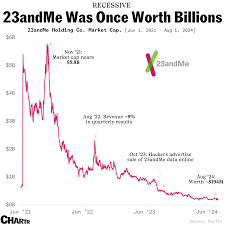
When 23 and Me stock began trading publicly, it was valued at over $3.5 billion. However, due to declining revenues and increasing expenses, the stock has since shifted to the over-the-counter (OTC) market under the symbol MEHCQ, following compliance challenges on the NASDAQ.

Trading OTC generally means lower liquidity and higher volatility, making the stock riskier but potentially rewarding for speculative investors seeking exposure to the genomics revolution.


Why Investors Are Watching 23andMe Stock

Investors continue to monitor 23 and Me stock for several reasons:

  1. First-Mover Advantage: 23andMe is one of the first companies to commercialize consumer DNA testing, boasting over 14 million genotyped customers — the largest database of its kind in the world.
  2. Biotech Potential: Beyond ancestry testing, 23andMe is leveraging its data to develop novel therapeutics. Its partnership with GSK is aimed at identifying new drug targets through genetic data.
  3. AI-Driven Future: With the explosion of AI in genomics, 23andMe’s massive dataset gives it a competitive advantage in predictive health modeling and precision medicine.
  4. Expanding Market: The consumer genomics market is expected to grow from $3 billion in 2023 to over $10 billion by 2030, providing long-term growth opportunities.
  5. Reputation & Brand Recognition: Despite setbacks, the brand remains synonymous with DNA testing, offering it a strong base to diversify and pivot.

23andMe’s Evolution from Consumer Health to Biotech

While 23andMe started as a consumer DNA testing company, its strategic focus has shifted toward drug discovery and therapeutics. This evolution positions the firm within the biotech sector, where the potential payoff can be substantial — though riskier. The company’s growing repository of genetic and phenotypic data enables scientists to identify genetic correlations with diseases, accelerating drug target discovery.

One notable achievement was the creation of 23andMe Therapeutics, a division solely dedicated to applying genomic data to drug development. This dual model — consumer testing + biotech research — makes 23andMe’s stock one of the few that straddle direct-to-consumer health and pharmaceutical R&D.


Summary Table: 23andMe Stock Overview

FeatureDetails
Ticker SymbolME (NASDAQ), MEHCQ (OTC)
Founded2006
Public Listing DateJune 2021
Founder/CEOAnne Wojcicki
HeadquartersSunnyvale, California
Core BusinessConsumer DNA testing, health insights, biotech R&D
PartnershipsGlaxoSmithKline (GSK)
Customer Base14+ million genotyped users
Revenue ModelDirect-to-consumer kits, data licensing, therapeutics
Stock TypeHigh-risk, innovation-driven biotech stock

In short, 23 and Me stock is a blend of consumer technology and biotechnology, offering exposure to one of the most exciting and controversial frontiers in modern science — the human genome. Its success depends largely on its ability to turn genetic data into profitable health solutions while maintaining consumer trust and regulatory compliance.

Key Financials & Valuation of 23andMe Stock

Understanding the financial health and valuation of 23 and Me stock is essential before making any investment decision. Since its public debut in 2021, 23andMe’s financial performance has reflected both its innovation potential and the challenges of scaling a data-driven biotech business. Below, we’ll break down the company’s revenue trends, earnings, valuation multiples, and market performance to help investors gain a clearer picture.


Recent Share Price and Market Performance

As of 2025, 23 and Me stock (MEHCQ) trades on the OTC (Over-the-Counter) market after being delisted from the NASDAQ in 2024 due to not meeting minimum share price requirements.

  • Current Price (Approx.): $0.30 – $0.50 per share
  • Market Capitalization: Roughly $150–200 million
  • 52-Week Range: $0.15 (low) – $0.75 (high)
  • Average Daily Volume: Moderate to low (indicating reduced liquidity)

This significant drop from its initial $10 SPAC listing price reflects investor skepticism over profitability timelines and the broader sell-off in speculative biotech and tech stocks.

However, 23andMe remains actively traded among retail investors who see the potential in its massive genetic data assets and pharmaceutical partnerships.


Revenue, Earnings, and Growth Trends

Let’s examine how 23andMe has been performing financially over the last few years.

Fiscal YearRevenue (USD)Net Income (USD)Revenue Growth YoY
2021$305 million-$210 million
2022$272 million-$255 million-10.8%
2023$251 million-$240 million-7.7%
2024$230 million (est.)-$195 million (est.)-8.3%

(Data estimated from company filings and analyst reports.)

A few takeaways from this data:

  • Declining Revenues: Sales from direct-to-consumer DNA kits have gradually slowed since the pandemic peak, as the market became saturated.
  • High Losses: Like many biotech innovators, 23andMe spends heavily on R&D (Research & Development), particularly in its therapeutics division.
  • Cost Pressures: The company continues to face rising operating costs for marketing, cloud infrastructure, and data storage.

Still, management remains confident that data licensing and pharma collaborations could offset consumer sales declines over time.

“We are building a long-term foundation — using genetic data to reshape how diseases are discovered and treated.”
Anne Wojcicki, CEO of 23andMe


Valuation Metrics: How 23andMe Compares to Peers

While traditional valuation methods (like P/E ratios) are difficult for loss-making companies, we can compare price-to-sales (P/S) ratios and enterprise value (EV) metrics against peers in biotech and consumer health sectors.

CompanyMarket Cap (USD)Revenue (USD)P/S RatioStatus
23andMe (MEHCQ)~$180M~$230M0.78xPublic (OTC)
Illumina (ILMN)~$20B~$4.5B4.4xPublic (NASDAQ)
Myriad Genetics (MYGN)~$2.1B~$700M3.0xPublic (NASDAQ)
Invitae (NVTAQ)~$120M~$450M0.27xOTC (Bankrupt 2023)

This table shows that 23andMe stock trades at a deep discount compared to profitable peers like Illumina or Myriad Genetics — a reflection of market skepticism. However, for long-term investors, this low valuation multiple could represent a potential opportunity if the company manages to stabilize revenues and unlock new business streams.


Cash Position and Burn Rate

23andMe reported a cash balance of around $250 million (as of late 2024), down from $700 million post-SPAC. The company has been burning approximately $150–200 million annually, which gives it a runway of about 12–18 months before it needs new funding (via debt, equity, or asset sales).

This financial pressure highlights the importance of partnerships (like the GSK collaboration) and a potential need to pivot its business model towards higher-margin services such as data licensing and therapeutics royalties.


Dividends and Shareholder Returns

Currently, 23 and Me stock does not pay dividends. The company’s focus is on growth and reinvestment, not returning capital to shareholders. For investors, this means the primary return potential lies in capital appreciation — if and when 23andMe can demonstrate profitability or major biotech breakthroughs.


Analyst Sentiment

Market analysts remain divided on 23andMe’s outlook:

RatingAnalyst ViewpointRationale
Bullish (30%)“Undervalued biotech with vast data potential.”Belief in long-term monetization of DNA database.
Neutral (50%)“Wait-and-see approach.”Need evidence of sustainable revenue growth.
Bearish (20%)“Cash burn risk and OTC status.”Concern over liquidity and financing needs.

While 23 and Me stock is seen as high-risk, it still garners interest from innovation-focused investors betting on the genetic medicine revolution.


Financial Snapshot Summary

MetricDetails
Stock Price~$0.40 (OTC: MEHCQ)
Market Cap~$180M
Revenue (FY 2024)~$230M
Net Loss (FY 2024)~$195M
Cash Balance~$250M
DebtMinimal (under $50M)
DividendNone
Valuation (P/S)0.78x
OutlookHigh-risk, speculative biotech

In summary, 23 and Me stock currently represents a high-risk, potentially undervalued biotech play. The company’s near-term financials remain weak, but its large-scale genetic database, AI capabilities, and biopharma collaborations position it for long-term upside — if management can control costs and prove the commercial viability of its research.

3. 23andMe Stock (ME): Financial Performance and Historical Trends

23 and me stock

When analyzing 23andMe stock (ME), it’s crucial to understand its financial performance, revenue trends, and stock price history since going public. These insights reveal the company’s progress, challenges, and potential for future growth.

3.1. Historical Stock Price Performance

23andMe went public through a SPAC (Special Purpose Acquisition Company) merger with VG Acquisition Corp in June 2021. The deal initially valued the company at around $3.5 billion. When trading began under the ticker ME on the NASDAQ, the stock price opened around $13.32 per share, attracting strong attention from both retail and institutional investors.

However, like many SPAC-backed companies in the same era, 23andMe stock experienced a significant decline over time. Below is a simplified table showing the stock’s key price points since IPO:

YearApprox. Stock Price (USD)Notable Events
2021$13.32 (initial) → $10.00SPAC merger completed; investor enthusiasm high
2022$2.50 – $3.00Post-SPAC decline; market downturn in tech and biotech
2023$1.00 – $1.50Cost-cutting measures; renewed focus on therapeutics
2024~$0.70 – $1.00Trading below $1; potential delisting warnings
2025 (as of now)~$0.50 – $0.70Stock volatility; increased short interest

This sharp decline illustrates investor skepticism around 23andMe’s ability to turn a profit in the short term, particularly as consumer demand for DNA kits has slowed since the pandemic-era boom.


3.2. Revenue and Growth Trends

23andMe’s revenue has seen fluctuations tied to both its consumer testing business and biotech research initiatives. In its FY2023 earnings report, the company reported:

  • Total revenue: $299 million
  • Net loss: $312 million
  • Gross margin: ~45%

The losses stem from heavy R&D spending and marketing costs to expand its health and therapeutics offerings.

Here’s a quick summary of 23andMe’s revenue breakdown by segment (approximate percentages based on SEC filings):

Business SegmentDescriptionShare of Total Revenue
Consumer & Research ServicesDNA testing kits, data subscriptions, and research collaborations~85%
TherapeuticsDrug discovery partnerships, internal R&D~15%

While the therapeutics segment remains small, it represents a high-growth opportunity as the company leverages its genetic database to identify drug targets.


3.3. Factors Affecting 23andMe Stock Performance

Several internal and external factors have influenced 23andMe stock’s performance:

1. Market Sentiment on SPACs

Post-2021, many SPAC companies struggled to meet lofty expectations, leading to a broad selloff in the category. 23andMe, as part of that group, suffered from waning investor confidence.

2. Consumer Behavior Shifts

Demand for at-home DNA kits has cooled as privacy concerns increased and as most interested consumers already took tests between 2017–2020.

3. Competitive Landscape

Rivals like AncestryDNA, MyHeritage, and Invitae continue to erode 23andMe’s market share in consumer genomics.

4. Expansion into Biotech

While costly in the short term, the company’s move into therapeutics has long-term promise, especially through its partnership with GlaxoSmithKline (GSK).

5. Macroeconomic Conditions

Rising interest rates and investor caution toward unprofitable tech-biotech hybrids further pressured ME stock.


3.4. Analyst Opinions and Market Sentiment

Market analysts remain divided on 23andMe stock. Some see deep undervaluation given its data assets, while others question its path to profitability.

  • Bullish case: 23andMe holds a genetic database of over 14 million users, giving it a unique edge in AI-driven drug discovery.
  • Bearish case: High cash burn, declining consumer sales, and limited near-term catalysts make profitability uncertain.

According to TipRanks and MarketBeat (as of late 2025):

  • Consensus rating: Hold
  • Price target range: $0.50 – $1.20

Key Takeaway

23andMe stock (ME) tells a story common to early-stage biotech disruptors—massive potential overshadowed by financial challenges. The company’s ability to shift from a consumer DNA testing brand to a biotech innovator will determine its long-term stock trajectory.

4. 23andMe’s Business Model and Future Growth Prospects

23 and me stock

The business model of 23andMe is what truly sets it apart from other publicly traded companies in both the consumer technology and biotech sectors. While many investors initially viewed it as just a DNA testing company, the company’s core strategy revolves around leveraging genetic data for long-term value creation — not only through consumer services but also through therapeutic research and drug discovery.

Let’s break down how 23andMe’s business model works, what its future growth opportunities are, and the risks that investors in 23andMe stock (ME) should carefully consider.


4.1. Dual Revenue Streams: Consumer Genetics + Therapeutics

23andMe operates under a hybrid business model, combining direct-to-consumer (DTC) genetic testing with biotechnology research. This model is structured around two main divisions:

SegmentDescriptionRevenue ContributionGrowth Outlook
Consumer & Research ServicesSells DNA testing kits, health reports, ancestry insights, and offers data-sharing partnerships with research institutions.~85%Slowing but stable revenue source.
TherapeuticsUses aggregated genetic data to identify potential drug targets and develop new treatments (often in partnership with pharma companies).~15%High long-term potential.

This dual approach gives 23andMe a unique competitive advantage — it owns a massive, permission-based database of human genetic information that can be monetized repeatedly across both consumer and medical markets.


4.2. How 23andMe Makes Money

The company earns revenue through several streams, each contributing differently to its financial performance:

1. DNA Testing Kits

  • 23andMe’s flagship product is its saliva-based DNA test, which costs around $99–$199 depending on the service tier (Ancestry Service, Health + Ancestry, or Premium).
  • Once a customer submits their DNA sample, they receive detailed health and ancestry reports powered by genetic analysis.
  • The company also profits from recurring subscriptions and add-on features, such as health insights updates and personalized wellness recommendations.

2. Research and Data Partnerships

  • 23andMe partners with pharmaceutical and academic organizations to license anonymized genetic data (with user consent) for research purposes.
  • Its collaboration with GlaxoSmithKline (GSK), valued at $300 million, is one of its most significant data-driven partnerships. This deal focuses on using 23andMe’s genetic data to identify drug targets for diseases like cancer and autoimmune disorders.

3. Therapeutic Development

  • Beyond licensing, 23andMe has started building an internal therapeutics pipeline, using its own data to develop drug candidates.
  • This division is expected to drive long-term profitability, as successful drug commercialization could generate billions in future royalties.

4.3. The Power of Genetic Data

The real asset behind 23andMe stock (ME) isn’t just its products — it’s the data.
Over the past decade, the company has collected DNA samples and consented health information from over 14 million individuals. This creates an unprecedented database that combines genetic, phenotypic, and lifestyle data, which is invaluable for:

  • Drug discovery and target validation
  • Population genomics
  • Predictive healthcare analytics
  • AI-driven precision medicine

This kind of data is nearly impossible to replicate, giving 23andMe a long-term competitive moat in a data-driven future where healthcare personalization is key.


4.4. AI and the Future of Genomic Insights

In recent years, 23andMe has started to incorporate artificial intelligence and machine learning into its operations. AI helps the company:

  • Identify new genetic associations faster.
  • Improve health prediction accuracy in user reports.
  • Enable automated drug target discovery through pattern recognition.

These technological advancements are positioning the company to evolve from a consumer product brand into a genomic intelligence platform — a critical transition for future growth.


4.5. Future Growth Opportunities

The future of 23andMe stock largely depends on how effectively the company can execute its growth initiatives. The key opportunities include:

1. Expansion of Health Subscriptions

23andMe can shift toward a recurring revenue model by offering continuous health insights through paid subscriptions, personalized nutrition reports, and long-term wellness tracking.

2. Drug Development Pipeline

The company has announced multiple drug candidates under research. Even one successful FDA-approved drug could dramatically transform its financial outlook.

3. Global Expansion

Currently, most sales come from the U.S. and a few other developed markets. Expanding into Europe, Asia, and the Middle East could unlock millions of new users.

4. Integration with Digital Health Platforms

By partnering with fitness apps, healthcare providers, and insurers, 23andMe can integrate its data into personalized medicine ecosystems.

5. AI and Data Licensing

AI will allow 23andMe to analyze data faster and license insights to pharma companies for substantial recurring revenue.


4.6. Key Risks and Challenges

Despite its promising vision, investors should be aware of several risks associated with 23andMe stock:

  1. Privacy Concerns – Consumer skepticism about sharing genetic data remains high, especially amid growing cyber threats.
  2. Regulatory Barriers – FDA approval processes for genetic testing and drug development are lengthy and complex.
  3. Cash Burn – The company continues to post heavy losses due to R&D spending and limited profitability.
  4. Market Saturation – The DTC genetic testing market has matured, limiting short-term consumer growth.
  5. Competition – Companies like AncestryDNA, Invitae, and emerging biotech startups compete aggressively on both data and discovery fronts.

Key Insight

23andMe is at a strategic crossroads: it can either remain a niche consumer genetics company or successfully transform into a biotech powerhouse leveraging one of the world’s largest human genetic datasets.

For investors in 23andMe stock (ME), the long-term upside lies not in today’s DNA kits, but in tomorrow’s precision medicine breakthroughs.

Conclusion: Is 23andMe Stock a Good Investment?

23 and me stock

The story of 23andMe stock (NASDAQ: ME) is one of bold ambition — a company attempting to bridge the worlds of consumer genetics and biotechnology using one of the largest human genetic databases ever assembled.

At its core, 23andMe is not just a DNA testing company. It’s a data-driven health intelligence platform, positioned at the intersection of AI, genomics, and personalized medicine. This gives it an edge in the long-term race to unlock the full potential of genetic information for drug discovery and preventive healthcare.

However, the path forward isn’t simple. The company faces financial hurdles, market saturation, and regulatory uncertainty. Its stock has experienced significant volatility since going public, reflecting investor caution.

Yet, for long-term investors who believe in the future of genomic data, 23andMe may represent a speculative but high-upside opportunity. Its partnerships with companies like GlaxoSmithKline, continued investment in AI and therapeutics, and ability to monetize its vast database give it an advantage that few others possess.

Key Takeaways

  • Ticker Symbol: ME (NASDAQ)
  • Business Model: Dual revenue streams from genetic testing + therapeutic R&D
  • Core Strength: Proprietary database of over 14 million genotyped individuals
  • Main Risk: Profitability remains distant, and privacy concerns could slow adoption
  • Investment Outlook: Long-term potential with short-term volatility — ideal for investors willing to wait on biotech innovation

“Genetics will do for healthcare what the internet did for communication.”
Anne Wojcicki, CEO & Co-Founder of 23andMe

In summary, 23andMe stock represents a fascinating blend of consumer technology and biotech potential. While it may not be a traditional blue-chip investment today, its vision for the future of personalized medicine could make it a pivotal player in the genomics revolution — and for some investors, that makes it worth watching closely.