How to Stay Updated with the Latest Tech News and Technology Trends

Learn how to stay updated with the latest tech news using trusted websites, social media, podcasts, newsletters, and digital tools. Discover the best ways to follow technology trends, AI updates, cybersecurity news, gadgets, and innovation.

How to Stay Updated with the Latest Tech News

Technology changes faster than almost any other industry in the modern world. Every day, companies launch new products, software updates, artificial intelligence tools, cybersecurity systems, and digital innovations that influence how people work, communicate, and live. Staying updated with the latest tech news has become essential not only for technology professionals but also for students, entrepreneurs, businesses, and everyday consumers.

From artificial intelligence and smartphones to cloud computing and cybersecurity, technology impacts nearly every aspect of society. Businesses rely on digital systems to improve productivity, governments use technology for communication and infrastructure, and consumers depend on digital platforms for shopping, entertainment, banking, and education.

However, the massive amount of online information can feel overwhelming. Thousands of websites, social media posts, videos, newsletters, podcasts, and blogs compete for attention daily. As a result, many people struggle to find reliable technology news sources while avoiding misinformation and unnecessary distractions.

Learning how to stay informed effectively can help individuals understand emerging trends, improve digital literacy, discover career opportunities, and prepare for future technological changes. This article explores practical strategies for following technology news, identifying trustworthy sources, using digital tools wisely, and building healthy information habits.

Why Staying Updated With Tech News Is Important

Technology shapes economies, industries, and everyday life. Understanding technological developments helps people adapt to changes and remain competitive in a rapidly evolving world.

Technology Influences Every Industry

Modern industries rely heavily on digital innovation. Technology affects:

  • Healthcare systems
  • Financial services
  • Education platforms
  • Manufacturing
  • Transportation
  • Entertainment
  • Marketing and advertising

Even industries that once relied primarily on physical labor now depend on software, automation, and digital communication.

Career Growth and Opportunities

People who follow technology trends often gain valuable professional advantages. Employers increasingly seek workers who understand digital tools, automation, artificial intelligence, and cybersecurity.

Technology awareness can help professionals:

  • Improve productivity
  • Learn valuable skills
  • Identify new career paths
  • Adapt to workplace changes

Better Decision-Making

Consumers who stay informed about technology can make smarter decisions regarding:

  • Device purchases
  • Online security
  • Software subscriptions
  • Digital privacy
  • Investment opportunities

Understanding technology trends also helps people recognize scams and misleading claims.

Follow Trusted Technology News Websites

One of the most effective ways to stay updated is by following reliable technology news platforms.

Trusted websites provide accurate reporting, product reviews, expert analysis, and breaking industry news.

Benefits of Professional Tech Journalism

Reliable technology journalism helps readers understand:

  • New product launches
  • Artificial intelligence developments
  • Cybersecurity threats
  • Startup growth
  • Industry competition
  • Digital trends

Professional reporting also provides context and expert insights that social media posts often lack.

Importance of Accurate Reporting

Technology misinformation spreads quickly online. Unverified rumors about products, software updates, or AI breakthroughs can confuse readers and create unrealistic expectations.

Following trustworthy sources reduces the risk of believing false or exaggerated information.

Read Multiple Sources

Different technology websites may focus on different aspects of the same story.

Reading multiple perspectives helps readers gain a broader understanding of industry developments.

Use Social Media Wisely

Social media platforms have become major sources of breaking technology news.

Industry leaders, developers, journalists, and technology companies often share updates instantly online.

Best Social Media Platforms for Tech News

Popular platforms for technology discussions include:

  • X
  • LinkedIn
  • YouTube
  • Reddit
  • TikTok

These platforms allow users to discover emerging trends quickly.

Follow Industry Experts

Technology experts frequently share valuable insights, tutorials, predictions, and analysis.

Following experienced professionals helps users learn directly from industry insiders.

Avoid Information Overload

Too much social media consumption can become distracting and stressful.

Users should create focused feeds that prioritize quality information over viral content.

Subscribe to Technology Newsletters

Email newsletters remain one of the most efficient ways to receive curated technology updates.

Many journalists and technology companies provide daily or weekly newsletters summarizing important developments.

Why Newsletters Are Useful

Newsletters help readers:

  • Save time
  • Discover key stories
  • Learn about trends
  • Avoid unnecessary browsing

Curated information makes staying informed more manageable.

Specialized Newsletters

Some newsletters focus on specific technology topics such as:

  • Artificial intelligence
  • Startups
  • Cybersecurity
  • Consumer electronics
  • Software development

This allows readers to customize their information experience.

Daily vs Weekly Newsletters

Daily newsletters provide quick updates, while weekly editions often offer deeper analysis and broader industry insights.

Watch Technology Videos and Tutorials

Video content has become one of the most popular ways to learn about technology.

Technology creators on video platforms explain trends, review products, and discuss industry developments.

Why Video Content Works

Videos simplify complex topics through visual demonstrations and real-world examples.

Many people find video learning easier than reading long articles.

Product Reviews and Demonstrations

Technology videos often include:

  • Smartphone reviews
  • Laptop comparisons
  • Software tutorials
  • AI tool demonstrations

Visual explanations help consumers understand features more clearly.

Educational Technology Channels

Educational creators teach audiences about coding, cybersecurity, artificial intelligence, and digital tools.

Learning through video improves engagement and retention.

Listen to Technology Podcasts

Podcasts allow people to stay informed while multitasking.

Many technology podcasts feature discussions with entrepreneurs, developers, investors, and journalists.

Benefits of Podcasts

Podcasts are convenient for:

  • Commuting
  • Exercising
  • Traveling
  • Household tasks

Listeners can learn without needing to look at screens constantly.

Industry Interviews

Podcasts often include interviews with technology leaders who share industry insights and predictions.

Deep Analysis

Unlike short news posts, podcasts provide detailed discussions about technology trends and challenges.

Use News Aggregator Apps

News aggregator applications collect articles from multiple sources into one platform.

These tools make following technology news more organized and efficient.

Advantages of Aggregator Platforms

Aggregator apps allow users to:

  • Follow specific interests
  • Save articles
  • Receive alerts
  • Discover trending topics

This reduces the need to visit multiple websites manually.

Personalized Recommendations

Many apps use algorithms to recommend content based on user preferences.

Balance Personalization With Exploration

Users should still explore diverse sources rather than relying entirely on algorithm-driven suggestions.

Stay Updated on Artificial Intelligence

Artificial intelligence is currently one of the most important topics in technology.

AI developments influence business, education, healthcare, customer service, and creative industries.

Why AI News Matters

AI technologies are transforming workplaces and digital systems worldwide.

Understanding AI trends helps people prepare for future opportunities and challenges.

AI Tools and Automation

Businesses increasingly use AI for:

  • Customer support
  • Data analysis
  • Marketing
  • Content creation
  • Process automation

AI adoption continues expanding rapidly.

Ethical Concerns Around AI

AI discussions often involve concerns about:

  • Privacy
  • Bias
  • Misinformation
  • Copyright
  • Job displacement

Governments and organizations continue debating responsible AI use.

Learn About Cybersecurity Developments

Cybersecurity news is increasingly important in a world dependent on digital systems.

Individuals and businesses face growing risks from cyberattacks and online fraud.

Common Cybersecurity Threats

Major digital threats include:

  • Phishing scams
  • Ransomware attacks
  • Identity theft
  • Malware
  • Data breaches

Understanding these threats improves online safety awareness.

Business Importance of Cybersecurity

Companies invest heavily in digital protection to secure customer information and operational systems.

Personal Online Safety

Consumers should stay informed about cybersecurity trends to protect personal devices and accounts.

Participate in Technology Communities

Technology communities allow people to discuss trends, ask questions, and share experiences.

Online communities often identify emerging technologies before mainstream media coverage.

Benefits of Community Learning

Communities provide:

  • Troubleshooting advice
  • Product recommendations
  • Career guidance
  • Technical discussions

Collaborative learning improves understanding.

Networking Opportunities

Technology communities connect professionals, students, developers, and entrepreneurs worldwide.

Verify Shared Information

Not all community discussions are accurate.

Users should verify technical claims through reliable sources.

Attend Technology Webinars and Conferences

Technology events provide direct access to industry knowledge and expert discussions.

Many conferences are now available virtually.

Advantages of Online Events

Virtual events allow people to learn from global experts without travel expenses.

Topics Covered

Technology conferences often focus on:

  • Artificial intelligence
  • Software development
  • Digital marketing
  • Cloud computing
  • Cybersecurity

Skill Development

Attending webinars helps professionals improve skills and remain competitive.

Use Alerts and Notifications

Search alerts help users monitor important technology topics automatically.

Benefits of Alerts

Alerts provide updates about:

  • Product launches
  • Company announcements
  • Industry changes
  • Cybersecurity warnings

Avoid Notification Fatigue

Too many alerts can become overwhelming.

Users should focus only on high-priority topics.

Read Industry Research Reports

Research reports provide deeper analysis than standard news articles.

They often include statistics, forecasts, and expert predictions.

Why Research Reports Matter

Reports help readers understand long-term technology trends and market developments.

Market Forecasting

Research often examines future growth in industries such as:

  • Artificial intelligence
  • Robotics
  • Cloud services
  • Renewable energy technology

Strategic Insights

Businesses use research reports to guide investment and innovation decisions.

Understand Emerging Technologies

Emerging technologies continue reshaping society and industries.

Understanding these innovations helps people prepare for future change.

Technologies Influencing the Future

Important emerging technologies include:

  • Artificial intelligence
  • Blockchain
  • Quantum computing
  • Robotics
  • Biotechnology

Rapid Innovation Cycles

Technology development now happens faster than ever before.

Continuous learning is becoming essential.

Digital Transformation

Businesses across industries continue adopting digital tools and automation systems.

Manage Information Overload

Too much information can reduce focus and productivity.

Creating healthy digital habits helps people stay informed without becoming overwhelmed.

Create a Daily Tech News Routine

A simple routine may include:

  • Reading morning headlines
  • Watching one educational video
  • Listening to a podcast
  • Checking cybersecurity updates

Consistency is more important than excessive consumption.

Prioritize Relevant Topics

People should focus on technology topics connected to their interests and goals.

Take Breaks From Digital Media

Limiting screen time can improve focus and mental well-being.

Technology News and Education

Technology awareness supports lifelong learning and professional development.

Digital Literacy Importance

Understanding technology improves:

  • Online communication
  • Problem-solving
  • Career readiness
  • Information evaluation

Learning New Skills

Technology news often introduces readers to valuable tools and educational resources.

Future Workforce Preparation

Many future jobs will involve digital systems, automation, and artificial intelligence.

Avoid Technology Scams and Fake News

Technology scams and misinformation are common online.

Common Technology Scams

Scams may involve:

  • Fake software
  • Cryptocurrency fraud
  • Phishing emails
  • False product promotions

Verify Before Sharing

People should confirm information through trusted sources before sharing online.

Critical Thinking Matters

Healthy skepticism helps users avoid scams and misleading claims.

The Role of Technology Journalism

Technology journalism helps explain innovations and industry developments to the public.

Challenges Facing Tech Reporters

Technology journalists deal with:

  • Fast-moving news cycles
  • Corporate secrecy
  • Misinformation
  • Complex technical subjects

Importance of Independent Reporting

Independent journalism supports transparency and public awareness.

Public Interest in Technology

Interest in digital innovation continues growing worldwide.

Future of Technology News

Technology reporting will continue evolving alongside digital transformation.

Artificial Intelligence in Journalism

AI tools may help journalists analyze information and produce faster reports.

Personalized News Experiences

Future platforms may offer highly customized technology news feeds.

Interactive Content

Technology journalism may become more visual and interactive through immersive media.

Conclusion

Staying updated with the latest tech news is increasingly important in a world shaped by artificial intelligence, cybersecurity, digital transformation, and rapid innovation.

Reliable information helps individuals improve digital literacy, make informed decisions, identify opportunities, and prepare for future technological changes.

By following trusted news websites, using social media wisely, subscribing to newsletters, listening to podcasts, joining online communities, and managing information habits carefully, people can stay informed without becoming overwhelmed.

Technology will continue transforming industries and daily life, making continuous learning and awareness essential for long-term success in the digital age.

Frequently Asked Questions

Why is it important to follow tech news?

Technology affects careers, communication, businesses, education, and everyday life.

What are the best sources for tech news?

Trusted websites, podcasts, newsletters, and official company blogs are among the best sources.

How can people avoid fake technology news?

Verify information through reliable publications and avoid sharing unconfirmed rumors.

Why is artificial intelligence always in tech headlines?

AI is transforming industries and influencing future workplace systems and digital tools.

Are technology newsletters useful?

Yes, newsletters provide curated updates and save time.

How does social media affect technology news?

Social media spreads information quickly but can also spread misinformation.

Why is cybersecurity news important?

Cybersecurity awareness helps protect personal and business information online.

What are the biggest current technology trends?

Artificial intelligence, cloud computing, cybersecurity, automation, and digital transformation are major trends.

How can beginners learn about technology?

Beginners can start with educational videos, podcasts, newsletters, and trusted technology websites.

How often should someone check tech news?

A balanced daily or weekly routine is usually enough to stay informed effectively.

Top 10 Business News Stories This Week – Latest Global Market and Economic Updates

Discover the top 10 business news stories this week, including updates on global markets, technology, inflation, artificial intelligence, stock trends, corporate developments, and economic growth worldwide.

Top 10 Business News Stories This Week

Business news continues to shape the global economy, financial markets, industries, and consumer behavior. Every week, major developments in technology, banking, trade, energy, retail, and investment influence how companies operate and how people manage their finances.

From rising inflation and stock market movements to artificial intelligence investments and changing consumer habits, today’s business landscape is evolving rapidly. Governments, corporations, entrepreneurs, and investors closely monitor business headlines because even a single economic development can affect markets worldwide.

This week’s top business stories reflect major changes in global finance, technology innovation, consumer spending, digital transformation, and economic policy. Companies are adapting to new challenges while exploring opportunities created by technological advancement and changing market conditions.

This article explores the top 10 business news stories this week while examining their impact on industries, economies, and the future of global commerce.

1. Artificial Intelligence Continues Dominating Business Investments

Artificial intelligence remains one of the biggest business stories globally. Major technology companies are investing billions into AI infrastructure, software development, cloud computing, and advanced research.

Businesses across industries are adopting AI tools to improve efficiency, automate repetitive tasks, and enhance customer experiences.

Growing Demand for AI Technologies

AI applications are expanding rapidly in:

  • Healthcare
  • Banking
  • Marketing
  • Education
  • Manufacturing
  • Customer support

Companies view AI as a key driver of future growth and competitive advantage.

Corporate Competition in AI

Technology companies are racing to develop more advanced AI systems and digital assistants.

Competition in AI development has intensified because businesses believe AI leadership will shape the future economy.

Concerns About AI Regulation

Governments are discussing regulations related to privacy, misinformation, data protection, and ethical AI use.

Business leaders are balancing innovation with responsible technology development.

2. Global Inflation Continues Affecting Consumer Spending

Inflation remains a major concern for consumers and businesses worldwide.

Higher prices for food, housing, fuel, transportation, and healthcare continue affecting household budgets.

Rising Cost of Living

Consumers are becoming more cautious about spending due to economic uncertainty and increasing living expenses.

Retail businesses are adjusting pricing strategies and marketing campaigns to maintain customer demand.

Central Bank Policies

Central banks continue monitoring inflation and adjusting interest rates to stabilize economies.

Higher interest rates can slow inflation but may also reduce borrowing and investment activity.

Impact on Businesses

Businesses face increased operational costs, including:

  • Raw materials
  • Labor expenses
  • Transportation
  • Energy bills

Many companies are focusing on cost-cutting and operational efficiency.

3. Stock Markets React to Economic Uncertainty

Financial markets continue responding to economic data, corporate earnings reports, and geopolitical developments.

Investors remain cautious while monitoring inflation, interest rates, and global growth trends.

Technology Stocks Remain Strong

Technology companies continue attracting investor interest due to strong demand for AI and digital services.

Semiconductor and cloud computing companies have performed particularly well.

Market Volatility

Stock markets experience rapid changes based on economic reports and political developments.

Investor confidence often shifts quickly in uncertain economic conditions.

Long-Term Investment Trends

Many investors continue focusing on industries expected to grow over the next decade, including:

  • Artificial intelligence
  • Renewable energy
  • Healthcare innovation
  • Cybersecurity

4. Renewable Energy Industry Expands Rapidly

Renewable energy remains one of the fastest-growing business sectors worldwide.

Governments and private companies are increasing investments in clean energy technologies.

Growth of Solar and Wind Energy

Solar and wind projects continue expanding due to environmental concerns and rising energy demand.

Energy companies are transitioning toward more sustainable business models.

Electric Vehicle Market Growth

Electric vehicle adoption continues increasing globally.

Automotive companies are investing heavily in EV production and battery technology.

Green Investment Opportunities

Investors are showing greater interest in environmentally sustainable businesses and green finance initiatives.

5. Banking Sector Faces Digital Transformation

Banks and financial institutions continue modernizing services through digital technology and automation.

Online banking and mobile payment systems are becoming increasingly popular.

Rise of Financial Technology Companies

Fintech companies are transforming traditional banking by offering faster and more convenient financial services.

Digital wallets and online payment systems continue growing worldwide.

Cybersecurity in Banking

As digital banking expands, cybersecurity becomes even more important.

Banks are investing heavily in fraud prevention and digital security systems.

Cryptocurrency and Financial Innovation

Cryptocurrencies and blockchain technology continue influencing financial discussions and investment strategies.

6. Global Supply Chains Continue Recovering

Supply chain disruptions caused by recent global crises continue affecting industries worldwide.

Businesses are working to improve supply chain resilience and reduce dependence on single suppliers.

Manufacturing and Shipping Challenges

Shipping delays and rising transportation costs remain challenges for global businesses.

Manufacturers are exploring regional production strategies to reduce risks.

Semiconductor Industry Importance

Semiconductors remain critical for industries such as:

  • Electronics
  • Automotive manufacturing
  • Artificial intelligence
  • Telecommunications

Governments are increasing support for domestic chip production.

Business Adaptation Strategies

Companies are using technology and data analytics to improve supply chain efficiency and forecasting.

7. Remote Work Continues Reshaping Business Culture

Remote and hybrid work models continue changing workplace expectations and corporate culture.

Many employees now prioritize flexibility and work-life balance.

Hybrid Work Models Become Standard

Businesses are experimenting with flexible office arrangements to improve productivity and employee satisfaction.

Remote collaboration tools remain essential for modern workplaces.

Impact on Commercial Real Estate

Reduced office attendance has affected commercial property markets in several cities.

Companies are reconsidering long-term office space needs.

Employee Well-Being Focus

Organizations are increasingly investing in mental health support and workplace wellness programs.

8. E-Commerce and Online Shopping Growth

Online shopping continues expanding as consumers prefer convenience and digital purchasing options.

Retail companies are investing heavily in logistics, automation, and customer experience.

Changing Consumer Behavior

Consumers increasingly expect:

  • Fast delivery
  • Personalized recommendations
  • Mobile-friendly shopping experiences

Businesses are adapting to these expectations.

Role of Artificial Intelligence in Retail

Retailers use AI for inventory management, customer analysis, and marketing personalization.

Competition in E-Commerce

E-commerce companies compete aggressively on pricing, delivery speed, and digital innovation.

9. Healthcare Industry Sees Major Innovation

Healthcare businesses continue investing in digital technologies, biotechnology, and medical research.

Innovation in healthcare remains one of the most important business trends globally.

Telemedicine and Digital Healthcare

Online healthcare consultations continue growing in popularity.

Patients increasingly use wearable devices and mobile health applications.

Biotechnology Investments

Biotechnology companies are attracting significant investment for research into vaccines, treatments, and medical technology.

AI in Healthcare

Artificial intelligence helps improve diagnostics, patient care, and healthcare efficiency.

10. Global Trade and Economic Partnerships Evolve

Countries continue strengthening trade partnerships while managing geopolitical tensions and economic competition.

International trade remains essential for global economic growth.

Regional Trade Agreements

Trade agreements help countries improve market access and economic cooperation.

Businesses benefit from reduced trade barriers and stronger international relationships.

Economic Competition Between Major Powers

Competition in technology, manufacturing, and energy industries continues shaping global trade strategies.

Future of International Commerce

Digital trade, automation, and sustainability will likely influence the future of global business.

Technology’s Growing Influence on Business

Technology now influences nearly every industry worldwide.

Companies investing in innovation are often better positioned for long-term success.

Cloud Computing and Data Services

Cloud technology allows businesses to improve efficiency, scalability, and digital operations.

Automation and Robotics

Automation continues transforming manufacturing, logistics, and customer service industries.

Importance of Cybersecurity

As businesses become more digital, protecting customer data and operational systems becomes increasingly important.

Consumer Confidence and Spending Trends

Consumer behavior plays a major role in economic performance.

When consumers feel financially secure, businesses often experience stronger sales growth.

Factors Influencing Consumer Confidence

Consumer spending is influenced by:

  • Employment levels
  • Inflation
  • Interest rates
  • Wage growth
  • Economic stability

Shift Toward Digital Payments

Digital payment systems continue replacing cash transactions in many regions.

Subscription Economy Growth

Subscription-based business models remain popular in entertainment, software, and e-commerce industries.

Startup Ecosystem and Entrepreneurship

Entrepreneurship continues driving innovation and economic growth.

Startups are developing solutions in technology, healthcare, education, and sustainability.

Venture Capital Investments

Investors continue supporting startups with high growth potential.

Artificial intelligence and green technology startups attract significant funding.

Challenges Facing Entrepreneurs

New businesses often face challenges including competition, funding access, and economic uncertainty.

Importance of Innovation

Innovation remains essential for long-term business success in competitive industries.

Media and Advertising Industry Changes

Digital advertising continues transforming the media landscape.

Businesses increasingly rely on online marketing strategies and social media campaigns.

Growth of Influencer Marketing

Influencers and digital creators play an important role in modern advertising strategies.

Streaming and Digital Content

Streaming platforms continue competing for audience attention and advertising revenue.

Data-Driven Marketing

Businesses use analytics and consumer data to improve marketing effectiveness.

Sustainability and Corporate Responsibility

Consumers increasingly expect businesses to operate responsibly and sustainably.

Environmental, social, and governance practices are becoming more important for companies and investors.

Sustainable Business Practices

Businesses are focusing on:

  • Reducing emissions
  • Ethical sourcing
  • Waste reduction
  • Renewable energy adoption

Investor Interest in ESG

Many investors now prioritize companies with strong sustainability practices.

Corporate Transparency

Businesses face growing pressure to communicate openly about environmental and social impact.

Future Business Trends to Watch

Several emerging trends may shape the future business landscape.

Artificial Intelligence Expansion

AI will likely continue transforming industries and workplace operations.

Renewable Energy Growth

Clean energy investments may create new industries and employment opportunities.

Digital Transformation

Businesses will continue adopting automation, cloud computing, and advanced analytics technologies.

Conclusion

This week’s top business news stories highlight a rapidly changing global economy shaped by technology, innovation, inflation, and evolving consumer behavior.

Artificial intelligence continues driving investment and competition, while renewable energy and digital transformation reshape industries worldwide.

At the same time, businesses face challenges related to inflation, cybersecurity, supply chain resilience, and geopolitical uncertainty.

Companies that adapt to technological change, prioritize sustainability, and respond to consumer expectations are more likely to succeed in the future economy.

Staying informed about business developments helps individuals, investors, and organizations better understand the trends shaping modern commerce and global markets.

Frequently Asked Questions

Why is business news important?

Business news helps people understand economic trends, financial markets, corporate developments, and investment opportunities.

Why is artificial intelligence dominating business headlines?

AI is transforming industries through automation, data analysis, and productivity improvements.

How does inflation affect businesses?

Inflation increases operational costs and can reduce consumer spending power.

Why are stock markets volatile?

Markets react to economic reports, interest rates, political developments, and investor confidence.

What industries are growing the fastest?

Technology, renewable energy, healthcare innovation, cybersecurity, and e-commerce are among the fastest-growing industries.

Why is renewable energy important for businesses?

Renewable energy supports sustainability goals and creates long-term economic opportunities.

How is remote work changing business culture?

Remote work increases flexibility and changes workplace expectations and office space usage.

Why is cybersecurity important for businesses?

Cybersecurity protects businesses from hacking, fraud, and data breaches.

What role does technology play in modern business?

Technology improves efficiency, communication, automation, and customer experience.

Why should people follow business news regularly?

Business news helps people make informed financial, career, and investment

Breaking News: Global Political Developments

Breaking News: Global Political Developments Explained

Breaking News: Global Political Developments is more than a headline category. It is a way to understand how decisions made by governments, courts, alliances, and international institutions influence the world in real time. A summit in Europe, a court ruling in France, a Security Council debate at the United Nations, or an oil supply decision in the Middle East can affect security, trade, migration, energy prices, diplomatic relations, and investor confidence across many countries.

In my experience, readers do not only need to know what happened. They also need to understand why it matters, who is involved, what has been confirmed, what remains uncertain, and what could happen next. That is especially important in a fast-moving political environment where misinformation, partial reports, and emotional commentary can spread faster than verified facts.

The Reuters Institute’s 2026 Digital News Report describes a period of public unease shaped by political, economic, and technological turbulence, with long-standing alliances and the global trading system under pressure. That context explains why global political news now requires careful reading, reliable sourcing, and clear analysis rather than quick reactions alone.

What Counts as Global Political Developments?

Global political developments include major decisions, negotiations, disputes, rulings, elections, policy changes, and international responses that shape relations between countries or affect domestic political stability. These developments may begin as local events, but they often become global when they influence alliances, markets, security planning, humanitarian policy, or cross-border trade. A court case in one country can affect an election. A defense summit can influence military spending across an alliance. A conflict near a shipping route can affect fuel prices in countries far away from the battlefield.

For SEO and reader value, this type of article should not treat every headline equally. The goal is to identify which events have wider impact and then explain them in plain language. Some stories are important because they involve powerful countries. Others matter because they involve international law, humanitarian risk, energy supply, or political instability. A strong analysis of Breaking News: Global Political Developments should connect the headline to the bigger picture without exaggerating what is known.

Political DevelopmentDescriptionReal-World Impact
Government PoliciesNew laws, regulations, or executive decisions introduced by governmentsCan influence citizens, businesses, and international relations
ElectionsNational or regional elections that determine political leadershipMay change domestic and foreign policy priorities
Diplomatic NegotiationsMeetings and discussions between countries to resolve issuesCan improve cooperation or reduce international tensions
Trade AgreementsAgreements that regulate trade between nationsAffect imports, exports, investment, and supply chains
International SanctionsEconomic or political restrictions imposed on countriesInfluence global trade, diplomacy, and economic stability
Security AlliancesCooperation between countries for defense and mutual protectionStrengthen regional security and collective defense strategies

Government Decisions and Diplomatic Moves

Government decisions are one of the most important parts of global political news because they can quickly change how countries cooperate or compete. These decisions may involve trade rules, sanctions, defense commitments, border policies, immigration changes, foreign aid, energy strategy, or recognition of another government. Diplomatic moves can include summits, treaty negotiations, ceasefire talks, peace plans, and high-level meetings between leaders or foreign ministers.

A good example is the continued effort to reshape UK–EU relations after Brexit. Reuters reported in July 2026 that Britain was looking toward a new summit with the European Union, with discussions involving agri-food cooperation, youth mobility, emissions trading links, and supply-chain access. This shows how diplomacy is not always dramatic. Sometimes the most important political developments happen through technical policy areas that affect businesses, workers, students, and consumers over time.

Elections, Court Rulings, and Leadership Changes

Elections and leadership changes are obvious political developments, but court rulings can be just as important. When legal decisions affect whether a political leader can run for office, form a government, or remain in power, the impact can extend beyond one country’s borders. Investors, allies, rivals, and international organizations all watch these moments because they may change future policy direction.

In France, Marine Le Pen’s appeal ruling was reported as a major political moment because it could influence whether she is able to run in the 2027 presidential race. This is the type of development that matters beyond national politics because France is a major European Union member, a NATO ally, and an important actor in debates around migration, defense, and European integration. When explaining such stories, writers should avoid predicting outcomes too confidently and instead focus on confirmed legal facts, political implications, and possible scenarios.

Why Breaking Global Political News Matters

Breaking global political news matters because political decisions rarely stay inside national borders. A conflict can disrupt shipping. A sanctions package can affect energy supply. A court ruling can reshape an election. A defense summit can influence public spending. A diplomatic breakdown can change market expectations. In a connected world, global political news is not only relevant to diplomats or journalists; it affects business owners, students, workers, investors, travelers, and communities.

Readers often search for the latest political news because they want quick updates, but the real value comes from understanding consequences. For example, a headline about NATO may appear to be only about military policy, but it can also affect technology investment, defense manufacturing, government budgets, and diplomatic relations. Similarly, a story about oil output may seem like an energy article, but it can also reflect war risk, regional instability, and the political calculations of producer countries.

That is why a professional article should explain both the event and the impact. It should answer what happened, why it matters, who is affected, and what to watch next.

Political Developments Affect Security and Alliances

Security alliances are one of the clearest examples of how political developments create global effects. NATO’s 2026 Ankara summit is a major event because it touches on collective defense, burden-sharing, Ukraine support, Russia policy, and transatlantic unity. Reuters reported that NATO leaders were expected to reaffirm an “ironclad commitment” to collective defense under Article 5 of the Washington Treaty at the Ankara summit.

This matters because alliance language can shape how governments prepare for future threats. Even when a summit declaration is diplomatic in tone, it can signal defense priorities, spending commitments, and strategic red lines. NATO’s own event information also confirms that the Ankara summit includes a Defence Industry Forum focused on defense production, investment, and innovation. That shows how security politics now connects directly with industrial capacity, technology, and economic planning.

Politics Can Influence Energy and the Economy

Political developments often affect the economy through energy prices, trade routes, sanctions, supply chains, and investor confidence. Energy is especially sensitive because conflict or instability near oil-producing regions and shipping routes can influence prices far beyond the region itself. For consumers, this may show up as fuel costs. For companies, it can affect transport, production, and pricing decisions.

Reuters reported that OPEC oil output rose in June 2026 as Gulf producers began reviving supply after disruption connected to regional conflict and concern around the Strait of Hormuz. This type of story demonstrates why geopolitical developments matter to everyday economic planning. A political event does not need to happen in a reader’s own country to affect their budget, business, or investment outlook. That is why political risk analysis is now a practical skill, not only an academic subject.

Current Global Political Themes to Watch

Current global political developments are best understood through themes rather than isolated headlines. The most important themes in July 2026 include defense coordination, European political uncertainty, post-Brexit cooperation, the humanitarian impact of conflict, Ukraine diplomacy, energy security, and political violence. Each theme connects to wider questions about trust, stability, leadership, and the future of international cooperation.

A useful way to read global political news is to ask whether a development changes the balance of power, affects civilians, alters economic expectations, or creates a new diplomatic path. Some stories are urgent because they involve immediate humanitarian risk. Others are important because they show long-term shifts in alliances or political identity. Together, these developments help explain the direction of world politics.

The Reuters Institute’s 2026 report also highlights how audiences are navigating news in an unsettled time, with concerns about technology, political instability, and changing media habits. That makes clarity and source transparency even more important for anyone writing or reading political analysis.

Europe Is Trying to Act More Collectively

Europe is facing several overlapping political pressures: security concerns, energy uncertainty, migration debates, domestic political fragmentation, and changing relations with the United States. These pressures have encouraged European leaders to coordinate more closely on defense, trade, industrial policy, and diplomatic messaging. However, unity is not automatic. Different countries have different economic interests, security priorities, and domestic political pressures.

Associated Press reported that European leaders rallied around Italy’s Giorgia Meloni after criticism from U.S. President Donald Trump, presenting the episode as part of a broader moment of European political coordination. Whether this unity lasts depends on practical decisions, including defense spending, support for Ukraine, trade negotiations, and migration policy. For readers, the key point is that European politics is not only about individual national elections. It is also about whether the European Union and European NATO members can act together during global instability.

Conflict Diplomacy Remains Fragile

Conflict diplomacy remains one of the most difficult areas of international political developments. Negotiations around Ukraine, Gaza, Iran, and wider Middle East tensions involve competing security claims, humanitarian concerns, domestic politics, and international law. Even when talks continue, progress can be slow because each side may define acceptable terms differently.

Reuters reported that the Kremlin said Russia’s conditions for a Ukraine peace deal had not changed since 2024, including demands related to Ukrainian territory and NATO ambitions. In the Middle East, the UN Security Council has continued to debate conditions in Gaza, including humanitarian concerns and wider regional tensions. These examples show why breaking political news must be handled carefully. A meeting, statement, or proposed plan does not automatically mean a settlement is near. Readers should look for verifiable changes such as signed agreements, ceasefire implementation, aid access, or formal resolutions.

Political Violence Is Becoming a Global Concern

Political violence has become a serious concern for governments, civil society, and international organizations. It includes attacks on public officials, politically motivated terrorism, intimidation during elections, threats against journalists, and violence linked to extremist movements. While each country has its own political context, the problem increasingly has cross-border dimensions because online radicalization, disinformation, and ideological networks can travel quickly.

Reuters reported that U.S. Secretary of State Marco Rubio planned to host a July 2026 summit with representatives from more than 60 countries to discuss political violence and political terrorism. The importance of such a summit is not only symbolic. It reflects growing recognition that political violence can weaken democratic institutions, disrupt elections, damage public trust, and create security challenges beyond national borders. For readers, this theme is worth watching because it links domestic politics with global security cooperation.

Fact Table: Major Political Developments and Why They Matter

The table below summarizes several major political developments and explains why they matter. A table is useful for readers who want a quick world politics update, but it should not replace deeper analysis. Political events are often connected, and the meaning of a development can change as new information becomes available.

DevelopmentRegionWhy It MattersReliable Source
NATO Ankara summitEurope/TransatlanticCould shape defense spending, Ukraine support, and alliance unityReuters and NATO
France Le Pen appealFrance/EUMay influence the 2027 presidential race and far-right strategyReuters
UK–EU reset talksUK/EUCovers trade, emissions, youth mobility, and supply-chain cooperationReuters
Gaza Security Council debateMiddle East/UNHighlights humanitarian and ceasefire concernsUN Security Council
OPEC output recoveryMiddle East/global economyConnects conflict risk, oil supply, and energy pricesReuters
Political violence summitGlobalShows rising international concern about political extremismReuters

This table can also support AEO and GEO performance because it gives search engines and answer engines a clear structure: development, region, importance, and source. For a professional website, I recommend updating this table when new official decisions, final court rulings, signed agreements, or summit declarations become available.

How to Read This Table

This table should be read as a snapshot of major international political developments, not as a complete list of everything happening in the world. The purpose is to help readers identify which stories have broader implications. Some developments matter because they affect security alliances. Others matter because they influence energy prices, elections, humanitarian conditions, or diplomatic relationships.

When reading any political table, focus on three things: the actor, the action, and the impact. The actor tells you who has power in the situation. The action tells you what changed. The impact explains why the event matters beyond the headline. This approach helps readers avoid confusion when news coverage moves quickly. It also helps writers avoid shallow summaries by connecting each development to real-world consequences.

What Readers Should Watch Next

Readers should watch for official confirmation, implementation, and reaction. In global politics, early reports often describe what leaders are expected to say or what diplomats are negotiating. The real importance becomes clearer when final documents are published, court rulings are issued, policies are implemented, or governments respond publicly.

For example, a draft summit declaration may signal political direction, but the final declaration matters more. A proposed ceasefire may sound hopeful, but implementation on the ground matters more. A court appeal may create political uncertainty, but the final ruling determines the legal outcome. This is why I recommend treating breaking news as a developing timeline rather than a single finished story.

How to Verify Breaking Political News

Verifying breaking political news is essential because political stories can spread quickly before all facts are confirmed. During elections, wars, protests, court cases, and diplomatic crises, misinformation can move faster than official statements. Social media posts, screenshots, anonymous claims, and edited videos can easily mislead readers if they are shared without context.

A strong verification process protects both readers and publishers. It also improves trust, which is increasingly important in a media environment where audiences are more cautious about political information. The Reuters Institute’s 2026 Digital News Report highlights a changing news environment shaped by social media, video platforms, AI chatbots, and falling trust in some traditional formats.

For professional publishing, verification should not be treated as an optional step. It should be part of the article structure. Writers should cite official sources, explain what is confirmed, identify what remains uncertain, and avoid turning speculation into fact.

Check Official Sources First

The first step in verifying global political news is to check official sources. These may include government departments, election authorities, courts, international organizations, central banks, treaty bodies, and official summit pages. Official sources are not always neutral in tone, but they help confirm what has formally happened.

For international security issues, the United Nations Security Council is especially important because it has primary responsibility for maintaining international peace and security under the UN Charter, and its decisions are binding on UN member states. For NATO-related stories, NATO’s official website can confirm events, programs, and summit details. A professional article should use these sources to confirm dates, mandates, official language, and institutional roles before adding analysis.

Compare Trusted News Organizations

After checking official sources, compare coverage from trusted news organizations. Reuters, Associated Press, major public broadcasters, and respected national newspapers often provide important context, interviews, and on-the-ground reporting. The goal is not to find sources that agree with your opinion. The goal is to identify which facts are consistently confirmed.

When multiple reliable outlets report the same development and official sources support the basic details, confidence is higher. When only one outlet reports a major claim, or the claim depends on unnamed sources, writers should use careful language such as “reported,” “expected,” “according to officials,” or “not yet confirmed.” This protects accuracy and makes the article more credible. Readers appreciate clarity, especially when the topic is politically sensitive.

Separate Facts From Analysis

One of the most important rules in political writing is to separate facts from analysis. Facts include dates, votes, official statements, rulings, casualty figures, summit documents, sanctions, and policy announcements. Analysis explains what those facts may mean. Both are valuable, but they should be clearly separated so readers know what is confirmed and what is interpretation.

For example, saying that NATO has scheduled a summit in Ankara is a factual claim if confirmed by NATO. Saying that the summit may reshape transatlantic relations is analysis. A professional article about Breaking News: Global Political Developments should make that distinction clear. This approach improves reader trust, supports SEO quality, and helps answer engines extract accurate information from the article.

Step-by-Step Guide to Following Global Political News

Following global political news can feel overwhelming because events happen in many regions at once. A reader may see updates about NATO, Ukraine, Gaza, France, the United Kingdom, oil markets, and political violence in the same day. Without a system, it becomes difficult to know which stories are urgent, which are long-term, and which are only noise.

A practical step-by-step method helps readers turn headlines into understanding. The goal is not to become an expert in every country. The goal is to learn how to read political developments with context, caution, and confidence. In my experience, the most useful habit is to slow down and ask structured questions before forming an opinion.

This method works for students, journalists, business owners, investors, and general readers. It can also be used by website editors who publish current affairs content and want to avoid thin or misleading coverage.

Step 1: Identify the Main Actor

The first step is to identify who is driving the news. Is the main actor a government, political party, court, military alliance, international organization, company, protest movement, or armed group? Understanding the actor helps readers judge authority, motive, and possible impact.

For example, a statement from a foreign ministry carries more formal weight than a social media post from a political supporter. A court ruling has a different legal effect from a campaign speech. A UN Security Council meeting has different implications from a local parliamentary debate. Once the main actor is clear, readers can better understand what type of power is being used: legal, diplomatic, military, economic, or symbolic.

Step 2: Check the Timeline

The second step is to check the timeline. Political misinformation often spreads when old events are presented as new or when early claims are shared after the situation has already changed. Readers should check the publication date, the event date, the update time, and whether the story is based on a draft, a final decision, or an expected announcement.

This is especially important during conflicts, elections, and legal cases. A statement made last month may no longer reflect the current position. A leaked proposal may not become policy. A planned summit may produce a different outcome from what early reports suggested. Timeline awareness helps readers avoid confusion and makes political analysis more accurate.

Step 3: Ask What Changes Now

The third step is to ask what actually changes because of the development. Not every political statement changes policy. Not every meeting produces an agreement. Not every court hearing changes a candidate’s legal status. The most useful question is: what is different now compared with before?

This question turns news into analysis. If a summit creates a binding commitment, that matters. If a court ruling blocks or permits a candidate, that matters. If a ceasefire allows aid access, that matters. If an oil supply decision changes market expectations, that matters. By focusing on practical change, readers can separate important developments from political noise.

How Global Political Developments Affect Businesses and Citizens

Global political developments affect businesses and citizens because politics shapes the rules, risks, and conditions in which people live and work. A business may not be directly involved in foreign policy, but it can still be affected by tariffs, sanctions, fuel prices, shipping delays, visa rules, cybersecurity threats, or investor confidence. Citizens may feel the impact through energy costs, travel restrictions, migration policy, public safety, elections, and national budgets.

This is why political risk is no longer only a concern for governments or large corporations. Small businesses, exporters, freelancers, students, and families may also need to understand global events. For example, a change in UK–EU cooperation can affect supply chains and professional mobility. A NATO defense decision can influence public spending and defense-sector jobs. A conflict in an energy-producing region can affect fuel prices and inflation expectations.

A professional article should explain these links clearly so readers understand why global political news is relevant to everyday life.

SectorPossible Political InfluenceExample Impact
EconomyPolicy changes, sanctions, and trade disputesInflation, currency fluctuations, and investment changes
EnergyConflicts in oil-producing regionsFuel prices and energy supply may fluctuate
BusinessTariffs, regulations, and geopolitical risksHigher operating costs and supply chain disruptions
TravelDiplomatic relations and security concernsVisa rules, travel advisories, and tourism demand
Financial MarketsElections and government decisionsStock market volatility and investor confidence
CitizensImmigration, public policy, and social stabilityDaily life, employment, and public services can be affected

Impact on Businesses and Investors

Businesses and investors monitor geopolitical developments because political risk can affect costs, demand, regulation, and planning. A company that imports goods may be affected by shipping disruption or tariff changes. A manufacturer may be affected by energy prices. A technology firm may be affected by sanctions, data rules, or export controls. Investors may react to political uncertainty by adjusting risk expectations.

This does not mean every political story creates immediate market movement. However, businesses should track developments that affect energy, trade, security, regulation, and consumer confidence. Reuters’ reporting on OPEC output and Gulf supply disruption is a good example of how regional political instability can become an economic issue. For business readers, the practical lesson is simple: political headlines should be translated into operational questions about cost, supply, compliance, and demand.

Impact on Citizens and Communities

Citizens are affected by global political developments in both direct and indirect ways. Direct effects may include travel warnings, visa policy, fuel prices, safety alerts, or changes in immigration rules. Indirect effects may include inflation, public spending choices, social tension, or shifts in national debate. A defense spending increase, for example, may support security goals but also raise questions about budget priorities.

Communities can also be affected by humanitarian crises, refugee movements, political violence, and foreign policy debates. When international events become part of domestic politics, they may influence elections, protests, community relations, and media narratives. This is why clear, balanced, and factual political writing matters. It helps readers understand complex issues without turning every development into fear or outrage.

Why Clear News Writing Builds Trust

Clear news writing builds trust because it respects the reader’s need for accuracy, context, and fairness. In political topics, trust is especially important because readers often approach the subject with strong opinions or concerns. A professional article should avoid sensational language, unsupported claims, and exaggerated predictions.

The best approach is to explain what happened, cite reliable sources, describe why it matters, and state what remains unknown. This style supports both SEO and AEO because it gives search engines and answer engines clear, structured information. It also supports GEO because generative systems are more likely to extract helpful answers from well-organized, entity-rich, source-backed content. Most importantly, it serves human readers who want clarity instead of confusion.

Quick Answer About Breaking News: Global Political Developments

Breaking News: Global Political Developments refers to fast-moving updates in world politics, including elections, conflicts, diplomatic talks, defense alliances, sanctions, energy disruptions, trade policy, and international security decisions. As of July 2026, major themes include NATO defense coordination, Europe’s political realignment, UK–EU cooperation, the humanitarian situation in Gaza, Ukraine diplomacy, Middle East energy disruption, and growing concern about political violence. The best way to follow global political news is to verify information through official institutions, compare trusted news sources, separate confirmed facts from analysis, and watch how governments and markets respond.

Frequently Asked Questions

Frequently asked questions help readers find direct answers to common search queries. They also support Answer Engine Optimization because question-based headings match the way people search and speak. For a topic like Breaking News: Global Political Developments, FAQs should be clear, factual, and updated when major events change.

What are the latest global political developments?

The latest global political developments include NATO defense coordination, UK–EU cooperation, European political realignment, Ukraine diplomacy, Gaza humanitarian concerns, Middle East energy disruption, and international concern about political violence. These issues are developing quickly, so readers should check official sources and trusted news organizations for the most recent confirmed updates before relying on any single report.

Why is global political news important?

Global political news is important because government decisions can affect security, trade, migration, energy prices, markets, public safety, and international relations. A conflict, summit, election, court ruling, or sanctions decision in one country can influence other regions through alliances, supply chains, diplomacy, and economic connections.

How can I verify breaking political news?

You can verify breaking political news by checking official institutions first, then comparing coverage from trusted news organizations. Look at publication dates, original statements, final documents, and whether multiple reliable sources confirm the same fact. Avoid relying only on screenshots, anonymous social media posts, or claims that do not link back to a credible source.

What is the difference between political news and geopolitical news?

Political news usually focuses on governments, elections, parties, policies, courts, and leadership decisions. Geopolitical news focuses on how countries interact through power, security, trade, energy, alliances, conflict, and diplomacy. Many major global stories contain both political and geopolitical elements because domestic decisions often affect international relations.

How do political developments affect the economy?

Political developments can affect the economy through energy prices, sanctions, trade rules, investor confidence, supply chains, defense spending, and currency expectations. For example, conflict near major shipping routes or oil-producing regions can influence fuel costs and inflation. Businesses often track political risk to plan pricing, logistics, investment, and compliance.

What sources are best for global political news?

The best sources include official government websites, court records, election authorities, international institutions, and trusted news agencies. For global issues, useful sources include the United Nations, NATO, Reuters, Associated Press, and official national government pages. A good reader should compare sources rather than depend on one headline.

How often should a global politics article be updated?

A global politics article should be updated whenever a major event changes, such as a final court ruling, signed agreement, official summit declaration, ceasefire implementation, election result, sanctions announcement, or verified data release. For breaking news topics, outdated information can quickly reduce trust and SEO value.

Conclusion

Breaking News: Global Political Developments should be read with both urgency and caution. The biggest stories in global politics are connected through security, diplomacy, elections, energy, humanitarian crises, public trust, and economic risk. A single event may appear local at first, but its effects can spread through alliances, markets, migration, and international institutions.

The best way to understand global political news is to verify facts, compare reliable sources, follow timelines, and focus on what actually changes. Readers should avoid reacting to headlines alone and instead look for confirmed decisions, official statements, and practical impact. For publishers, the strongest approach is to write clearly, cite credible sources, and separate fact from analysis.

Breaking News: Global Political Developments will continue to be an important topic because the world is moving through a period of uncertainty, shifting alliances, and rising public concern. A well-structured, source-backed article helps readers understand the news without becoming overwhelmed by it.

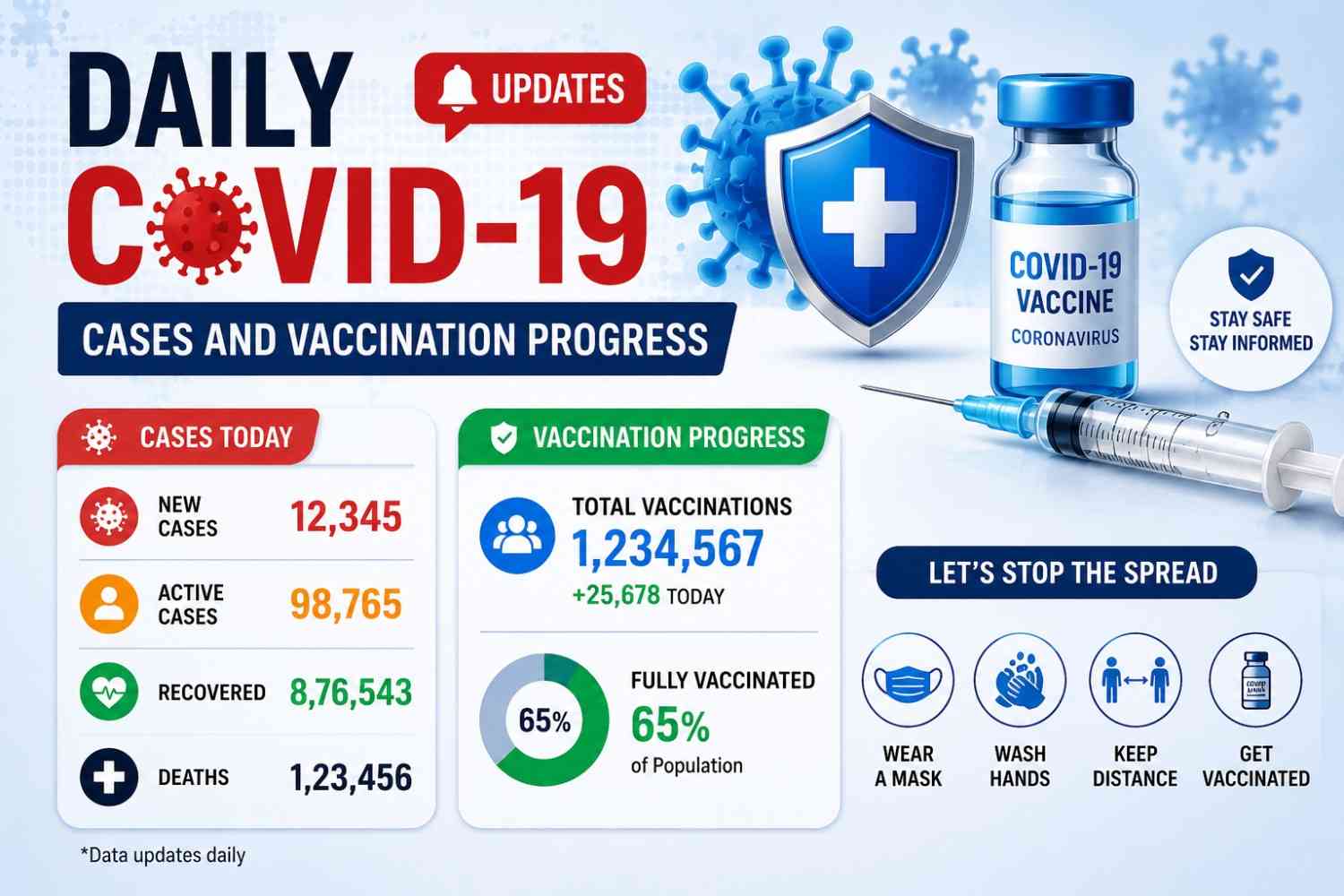
Daily COVID-19 Updates: Cases and Vaccination Progress

Daily COVID-19 Updates: Cases and Vaccination Progress Explained

Daily COVID-19 Updates: Cases and Vaccination Progress remain important for readers, families, workplaces, travelers, healthcare teams, and anyone who wants to understand public health trends without confusion. COVID-19 is no longer reported with the same intensity as it was during the emergency phase of the pandemic, but the virus still circulates, new variants can appear, and vulnerable groups still need accurate information. That makes reliable updates useful, especially when they are explained in simple language.

A strong COVID-19 update should not only mention “cases today” or “new vaccinations.” It should explain what the numbers mean, where the data comes from, how often it is updated, and what limitations readers should keep in mind. In my experience, people often misunderstand COVID data because they look at one number in isolation. A rise in cases may matter more if hospitalizations also rise. A fall in reported cases may be less reassuring if testing has dropped. Vaccination progress also needs context because “one dose,” “primary series,” and “updated vaccine” may mean different things.

This guide explains how to read COVID-19 updates professionally, how to understand vaccination progress, which official sources to trust, and which metrics give the clearest picture of public health risk.

Why COVID-19 Updates Still Matter

COVID-19 updates still matter because public health risk can change even when daily life feels normal. Many people no longer check COVID dashboards every day, but that does not mean the data has lost value. A well-prepared update helps readers understand whether infections are rising, whether severe disease is increasing, and whether vaccination coverage is strong enough to protect high-risk groups. For families, this can guide decisions about visiting elderly relatives, attending crowded events, or taking extra precautions during respiratory virus season. For businesses and schools, it can support planning around sick leave, hygiene practices, and indoor ventilation.

The purpose of Daily COVID-19 Updates: Cases and Vaccination Progress is not to create fear. The goal is to give readers practical, balanced, and source-backed information. COVID-19 data is most useful when it helps people make sensible decisions without overreacting to every small change. For example, a short-term increase in cases may be less concerning if hospitalizations remain low and vaccination coverage is strong among older adults. On the other hand, rising hospital admissions may deserve attention even if case numbers seem incomplete.

Because many countries now report COVID-19 less frequently, professional updates must explain both the data and its limits. Readers need to know what is confirmed, what may be delayed, and what should be checked before drawing conclusions.

COVID-19 IndicatorWhat It MeasuresHow to Interpret It
Reported CasesConfirmed SARS-CoV-2 infectionsIndicates known transmission but may miss unreported cases.
Test PositivityPercentage of positive COVID-19 testsHigher percentages may suggest increasing community spread or limited testing.
HospitalizationsCOVID-19-related hospital admissionsReflects the burden on healthcare systems and severe illness trends.
ICU AdmissionsPatients requiring intensive careHelps identify increases in severe disease.
DeathsCOVID-19-related fatalitiesShows long-term severity trends but usually lags behind case increases.
Vaccine CoveragePercentage of people vaccinated or up to dateIndicates the level of population protection against severe disease.
Wastewater SurveillanceSARS-CoV-2 detected in wastewaterProvides an early signal of rising infections even when testing declines.

Cases Show Transmission, But Not the Full Picture

Reported COVID-19 cases are one of the most familiar numbers in public health updates, but they are also one of the easiest to misunderstand. A case count usually reflects confirmed infections reported through testing systems. It does not capture every real infection in the community, especially when people use home tests, do not test at all, or recover without contacting a healthcare provider. This means reported cases can show a trend, but they rarely show the complete scale of transmission.

When reading COVID cases today, it is important to ask how the data was collected. Was it based on laboratory-confirmed tests, healthcare reports, or a national dashboard? Was it updated daily, weekly, or after a reporting delay? These details matter because a sudden drop in cases may reflect reduced testing rather than reduced spread. Similarly, a spike may come from delayed data being added after a weekend or holiday.

I recommend using reported cases as an early signal, not as the final answer. They become more meaningful when compared with test positivity, hospitalizations, wastewater surveillance, and official local guidance.

Hospitalizations and Deaths Show Severity

Hospitalizations and deaths help readers understand the severity of COVID-19 in a way that case counts alone cannot. While reported cases show known infections, hospitalization data shows how many people are becoming sick enough to need medical care. This is especially important for older adults, people with chronic conditions, pregnant people, and immunocompromised individuals. If hospital admissions begin to rise, public health officials may pay closer attention even when reported cases appear stable.

Deaths are another serious indicator, but they often lag behind infections and hospitalizations. This means death data can confirm the impact of a wave after transmission has already increased. Because of this delay, deaths should not be the only metric used to understand current risk. They should be read alongside hospital pressure, ICU admissions, and trends among vulnerable age groups.

A professional COVID-19 update should explain that severe outcomes are influenced by immunity, vaccination coverage, healthcare access, circulating variants, and population age structure. When hospitalizations and deaths remain low, that may suggest stronger protection against severe disease. When they rise together, the situation may require closer attention.

How to Read Daily COVID-19 Case Updates

Daily COVID-19 case updates are useful only when readers understand how the numbers are reported. During the earlier stages of the pandemic, many countries published daily dashboards with confirmed cases, deaths, testing numbers, and vaccination counts. Today, reporting systems are more varied. Some countries still update regularly, while others publish weekly summaries, monthly reports, or respiratory virus surveillance updates that include COVID-19 alongside influenza and RSV. Because of that, the word “daily” should be used carefully.

A responsible article about Daily COVID-19 Updates: Cases and Vaccination Progress should make the reporting period clear. If a number covers the past seven days, it should not be presented as a one-day total. If a source updates every week, the article should say “latest available update” rather than “today’s exact number.” This protects readers from misunderstanding the data and improves trust in the content.

Case updates should also be read as trends, not isolated events. One day of higher numbers may be caused by delayed reporting. One day of lower numbers may happen after a weekend or holiday. A better method is to review the direction over several reporting periods. If cases, test positivity, and wastewater signals rise together, that is usually more meaningful than one unusual daily figure. Good updates explain these patterns clearly so readers can make informed decisions.

Check the Reporting Period First

The reporting period is one of the most important details in any COVID-19 update. A number may look like a daily count, but it could actually represent several days or a full week of reported data. Some dashboards use “new cases” to mean cases added since the previous update, not necessarily infections that happened in the past 24 hours. This distinction is important because COVID-19 data often includes delays between testing, reporting, verification, and publication.

Before using a case number in an article, social post, or public update, check the source’s update date and reporting notes. Look for phrases such as “last 7 days,” “weekly update,” “latest reporting period,” or “data through.” These phrases explain what the number actually covers. If the dashboard does not clearly define the period, avoid making strong claims.

In professional publishing, I recommend adding a short note beside changing data. For example: “Data reflects the latest reporting period available from the official source.” This small detail improves transparency. It also protects your content from sounding outdated or misleading when dashboards revise their figures later.

Compare Cases With Test Positivity

Test positivity is a helpful metric because it shows the percentage of reported tests that come back positive. When test positivity rises along with reported cases, it may suggest that transmission is increasing. When cases fall but test positivity rises, the situation may be more complicated. It could mean fewer people are testing, while a higher share of those tested are infected. This is why test positivity gives context that case counts alone cannot provide.

However, test positivity also has limits. It depends on who is being tested and why. If testing is mostly done in hospitals or among people with symptoms, positivity may look higher than it would in broad community testing. If testing access changes, the trend may shift even if real infections do not change at the same speed.

For readers, the simple takeaway is this: do not rely on case numbers without checking testing trends. A balanced COVID-19 update should mention whether testing levels are stable, rising, or falling when that information is available. This gives readers a clearer sense of how reliable the case trend may be.

Understanding Vaccination Progress

Vaccination progress is one of the most important parts of COVID-19 reporting because it shows how well a population is protected against severe disease. However, vaccine data can be confusing if readers do not understand the terms used in dashboards. Some sources report total doses administered. Others report the percentage of people with at least one dose, a completed primary series, a booster dose, or an updated seasonal vaccine. These categories are not the same, and they should not be mixed together without explanation.

A clear article should explain vaccination progress in practical terms. For example, total doses can show the scale of a vaccination campaign, but vaccine coverage tells readers how many people in a population have actually received protection. Coverage by age group is often more useful than a national average because older adults and medically vulnerable people face higher risk of severe illness. If vaccine uptake is low in high-risk groups, public health concern may remain even if total doses look large.

Daily COVID-19 Updates: Cases and Vaccination Progress should also explain that vaccine recommendations can change. Updated vaccines may be recommended for specific seasons, age groups, or risk categories depending on local health authority guidance. Because of this, the safest approach is to use official sources for medical recommendations and avoid presenting general statements as personal medical advice. The article can educate readers while still encouraging them to follow local professional guidance.

Vaccine Coverage Is Not Just Total Doses

Vaccine coverage means the share of a population that has received a certain level of vaccination. This is more useful than simply counting total doses because one person may receive multiple doses over time. A country may report millions of doses administered, but that number does not automatically show how many people are currently protected or up to date with recommended vaccination. This is why coverage percentages are essential for understanding vaccination progress.

Coverage can be reported in different ways. It may show people with at least one dose, people who completed an initial vaccine series, people who received a booster, or people who received the latest recommended vaccine. Each category answers a different question. “At least one dose” tells us about early access. “Primary series completed” shows initial vaccination progress. “Updated dose” may better reflect current protection according to recent guidance.

When writing for general readers, explain the category being used before presenting the number. For example, say “percentage of adults who received the latest recommended dose” instead of simply saying “vaccinated.” This improves accuracy and avoids confusion. It also helps readers understand why different dashboards may show different figures for the same country.

Booster and Updated Vaccine Data Matter

Booster and updated vaccine data matter because immune protection can change over time. Protection against infection may decrease, while protection against severe disease is influenced by vaccination history, previous infection, age, health status, and the circulating variant. Updated vaccines are often designed to improve protection against currently circulating strains or to strengthen immunity during periods of higher respiratory virus activity. This makes updated dose uptake an important part of vaccination progress.

For high-risk groups, updated vaccine coverage may be more important than national averages. Older adults, people with weakened immune systems, and people with certain medical conditions may benefit most from staying current with recommendations. If coverage in these groups is low, public health officials may encourage targeted outreach even if overall vaccine uptake appears acceptable.

A professional article should avoid giving personal medical instructions. Instead, it should guide readers to official health authorities and healthcare professionals. A helpful sentence might be: “Check your national health authority or healthcare provider to confirm which COVID-19 vaccine schedule applies to your age and risk group.” This keeps the content useful, accurate, and responsible.

Useful COVID-19 Data Points to Track

A complete COVID-19 update should bring together several data points because no single number can explain the full situation. Cases show reported infections, but they can be affected by testing behavior. Hospitalizations show healthcare burden, but they usually rise after infections have already increased. Deaths show the most serious outcomes, but they are delayed and may be influenced by reporting definitions. Vaccination progress shows population protection, but it depends on age group, timing, and dose type.

This is why professional updates should combine multiple indicators into a simple explanation. Readers do not need overly technical language, but they do need context. For example, if reported cases increase while hospitalizations stay low, the update should explain that severe disease has not increased at the same pace. If wastewater surveillance rises before reported cases, the article can explain that community transmission may be increasing even if testing data is incomplete. If vaccination progress is slow among older adults, readers should understand why high-risk group coverage matters.

Daily COVID-19 Updates: Cases and Vaccination Progress should also help readers identify which numbers deserve the most attention. For a quick public health snapshot, I usually suggest checking hospitalizations, deaths, test positivity, wastewater trends, and updated vaccine coverage. These metrics work best when read together. The table below gives a simple, beginner-friendly explanation of each data point and why it matters.

Key COVID-19 Metrics Table

MetricWhat It MeansWhy It Matters
Reported casesConfirmed COVID-19 infections reported to official systemsShows known transmission, but may miss unreported infections
Test positivityShare of reported tests that are positiveHelps judge whether case data reflects wider spread
HospitalizationsPeople admitted to hospital with COVID-19Shows healthcare burden and severity
ICU admissionsSevere cases requiring intensive careIndicates pressure on advanced medical services
DeathsReported COVID-related deathsShows severe outcomes, usually with a reporting delay
Vaccine coverageShare of people vaccinated or up to dateShows population-level protection
Wastewater surveillanceSARS-CoV-2 levels detected in sewage samplesHelps identify trends when testing is limited
Variant surveillanceMonitoring of circulating SARS-CoV-2 variantsHelps track changes in virus behavior

This table is useful because it turns complex surveillance data into a practical reading checklist. Instead of asking only, “How many COVID cases are there today?” readers can ask a better question: “What do cases, severity indicators, and vaccination progress show together?” That shift creates a more accurate interpretation.

For example, rising wastewater signals may suggest increasing community spread before clinical testing fully reflects the change. Rising hospitalizations may indicate that infections are affecting vulnerable people or placing pressure on healthcare services. Stable deaths may suggest that severe outcomes remain controlled, but this should still be checked over time because death reporting often lags behind case trends.

A good COVID dashboard may not include every metric, but it should clearly define the ones it does show. If an article includes this table, it can help readers understand official dashboards more confidently and reduce confusion caused by changing reporting practices.

Which Metric Should Readers Trust Most?

There is no single COVID-19 metric that readers should trust in every situation. The best metric depends on the question being asked. If someone wants to understand transmission, reported cases, test positivity, and wastewater surveillance are useful. If someone wants to understand healthcare impact, hospitalizations and ICU admissions matter more. If someone wants to understand protection, vaccine coverage and updated dose uptake are more relevant.

For a general public update, hospitalizations are often one of the strongest indicators because they show whether infections are leading to serious illness and healthcare pressure. However, hospital data can lag behind infection trends, so it should not be used alone. Wastewater data may provide earlier signs of changing transmission, but it may not be available in every region. Test positivity can support interpretation, but it depends on who is being tested.

I recommend using a layered approach. Start with severity indicators such as hospitalizations and deaths, then review transmission indicators such as cases, test positivity, and wastewater data. Finally, compare these with vaccination progress, especially among high-risk groups. This method gives a balanced view without exaggerating or ignoring risk.

Best Official Sources for COVID-19 Updates

Choosing the right source is essential when writing or reading COVID-19 updates. Health information spreads quickly online, but not every chart, screenshot, or social media post is accurate. Some posts use old figures, some remove important context, and some compare countries using different definitions. For a professional website, the safest approach is to rely on official public health agencies and reputable data organizations that clearly explain their sources.

The best source often depends on the reader’s location. For global data, the World Health Organization provides international dashboards and official public health information. Our World in Data is useful for global comparisons because it organizes data in accessible charts and explains methodology. For the United States, CDC resources provide surveillance, vaccination, and respiratory virus data. For Europe, ECDC provides regional respiratory virus surveillance and public health updates. For country-level decisions, national health ministry websites should usually be checked first.

A high-quality article about Daily COVID-19 Updates: Cases and Vaccination Progress should name the source behind any changing data. It should also tell readers when the source was last checked or last updated. This matters because COVID-19 reporting can change over time. A dashboard that was updated daily in one year may later shift to weekly reporting. By explaining the source and update frequency, the article becomes more trustworthy and easier to maintain.

Official SourcePrimary FocusBest Used For
World Health Organization (WHO)Global COVID-19 surveillanceWorldwide case trends, vaccination updates, and public health guidance.
National Health MinistriesCountry-specific reportingLocal case counts, vaccination progress, testing, and health advisories.
CDC (United States)U.S. public health surveillanceHospitalizations, vaccination coverage, respiratory virus monitoring, and guidance.
CDC COVIDVaxViewU.S. immunization dataMonitoring vaccine uptake across different age groups and populations.
Our World in DataGlobal comparative datasetsComparing COVID-19 trends and vaccination progress between countries.
European Centre for Disease Prevention and Control (ECDC)European surveillanceRespiratory virus activity, COVID-19 trends, and regional public health data.

Global and Regional Sources

Global and regional sources help readers compare COVID-19 trends across countries, but they must be interpreted carefully. The World Health Organization collects and presents international COVID-19 data, but countries may report at different intervals and with different definitions. This means global dashboards are useful for broad trends, but they may not always match a local dashboard exactly. That difference does not automatically mean the data is wrong; it often reflects reporting methods.

Our World in Data is another useful source for global COVID-19 and vaccination data because it presents charts, country comparisons, and downloadable datasets. It is especially helpful for understanding long-term vaccination progress, cumulative doses, and population-level trends. However, readers should still check methodology notes because population estimates and data availability can affect comparisons.

For Europe, ECDC respiratory surveillance updates can help readers understand COVID-19 alongside other respiratory illnesses such as influenza and RSV. This approach reflects how many public health systems now monitor COVID-19 as part of broader respiratory virus surveillance. For the most local guidance, readers should always check their own national or regional health authority because rules, recommendations, and reporting schedules vary.

How to Verify a COVID Dashboard

Verifying a COVID dashboard is not difficult, but it requires a careful reading habit. The first thing to check is the source. Official government health agencies, public health institutions, and recognized data organizations are more reliable than reposted graphics or unsourced images. Next, check the update date. A dashboard may look current, but if it has not been updated recently, it may not reflect the latest situation.

The second step is to read the definitions. Look for what the dashboard means by “case,” “death,” “hospitalization,” “vaccinated,” or “up to date.” These terms may differ between sources. For example, one dashboard may count only laboratory-confirmed cases, while another may include clinically diagnosed cases. One source may report deaths by date of report, while another reports by date of occurrence.

The third step is to check whether the dashboard explains reporting limitations. Good sources often mention delays, incomplete data, or changes in reporting policy. When those notes are available, include them in your article. A transparent update is more valuable than a dramatic headline because readers can understand the data with the right context.

Step-by-Step Guide to Checking Today’s COVID-19 Data

Readers often search for COVID cases today because they want a fast answer. However, the fastest answer is not always the most accurate one. A better approach is to follow a simple process that checks the source, the reporting period, the main indicators, and the practical meaning of the numbers. This step-by-step method works for general readers, website publishers, content writers, and anyone preparing a public health update.

The first step is to start with an official source. If you need local information, use your national or regional health ministry. If you need global comparison, use WHO or Our World in Data. If you need U.S. data, use CDC resources. If you need European regional surveillance, use ECDC. After that, check the latest update date and reporting period. Do not assume that a dashboard is updated every day unless the source clearly says so.

Next, compare several indicators. Cases alone may not be enough. Look at hospitalizations, deaths, test positivity, wastewater data, and vaccination progress where available. Then add context before sharing the information. A responsible update should say where the data came from, what time period it covers, and what limitations may apply. This process makes your COVID-19 content more accurate, helpful, and search-friendly.

Step 1: Start With an Official Source

The first step in checking COVID-19 data is to choose a reliable source. Official sources reduce the risk of outdated, incomplete, or misleading information. For local case numbers and vaccination progress, national health ministry websites are often the best starting point. These sources usually reflect the reporting rules, testing systems, and vaccination recommendations of that specific country. For international context, WHO and Our World in Data can help compare broader trends.

When using an official source, do not stop at the headline number. Open the dashboard or report and review the notes. Check whether the source explains how cases are counted, how often the data is updated, and whether recent figures are preliminary. These details help you avoid common mistakes, such as treating a weekly total as a daily total.

If you are writing for a website, include the source name near any important data point. For example, “According to the latest update from the national health authority…” is clearer than saying “new data shows.” Source transparency builds trust and supports better SEO quality.

Step 2: Review Cases, Severity, and Vaccines Together

After choosing a reliable source, review cases, severity indicators, and vaccination progress together. This creates a fuller picture than any single metric can provide. Reported cases may show known infections, but hospitalizations show whether people are becoming seriously ill. Deaths show severe outcomes, but they usually lag behind earlier infection trends. Vaccination progress shows how much population protection exists, especially among groups at higher risk.

A practical method is to ask three questions. First, are reported infections increasing, decreasing, or stable? Second, are hospitalizations or deaths changing in the same direction? Third, is vaccine coverage strong among high-risk groups? These questions help readers understand whether the situation is mild, uncertain, or concerning.

For example, if cases rise but hospital admissions remain stable, the update should avoid alarmist language. If cases, test positivity, and hospitalizations rise together, the tone should be more cautious. If vaccine coverage is low among older adults, the article should encourage readers to check official vaccination recommendations. Balanced interpretation is what makes the update useful.

Step 3: Add Context Before Sharing

Before sharing COVID-19 data, add the context that readers need to understand it correctly. This includes the location, source, update date, reporting period, and metric definition. Without these details, even accurate numbers can become misleading. A figure such as “5,000 new cases” means very little unless readers know where it happened, when it was reported, and whether it covers one day or one week.

A strong sentence might say: “The latest official update shows an increase in reported cases during the most recent reporting period, while hospitalization trends should be checked to understand severity.” This is more responsible than saying, “COVID is surging,” without supporting context. It tells readers what is known and what should be reviewed next.

For publishers, context also improves content quality. Search engines and answer engines favor helpful, well-structured content that explains meaning, not just keywords. Adding context makes the article more reliable for readers and more suitable for long-term publication. It also reduces the risk of spreading outdated or exaggerated health information.

Common Problems With COVID-19 Data

COVID-19 data is valuable, but it is not perfect. Every public health dataset has limitations, and those limitations became more visible as testing and reporting systems changed over time. In many places, fewer people test through official channels, and many home test results are never reported. Some countries report less frequently than before. Others combine COVID-19 with broader respiratory virus surveillance. These changes do not make the data useless, but they do mean readers need careful explanations.

One common problem is reporting delay. Cases, hospitalizations, and deaths may be added days or weeks after they happen. Another issue is definition differences. A COVID-related hospitalization may be defined differently across regions. Death reporting may depend on whether COVID-19 was the main cause, a contributing factor, or simply present at the time of death. Vaccination data can also vary depending on whether the dashboard counts total doses, completed series, booster doses, or updated vaccine uptake.

A professional article should not hide these issues. Instead, it should explain them in plain language. This helps readers trust the content because it shows honesty and expertise. Daily COVID-19 Updates: Cases and Vaccination Progress are most useful when they acknowledge uncertainty while still giving practical guidance. Clear data literacy is better than false precision.

Reporting Delays Can Change the Numbers

Reporting delays are normal in public health data. A person may test positive today, but the result may not appear in an official dashboard immediately. Hospitals may update admission records after internal review. Death certificates and cause-of-death classifications may take even longer. Because of these delays, COVID-19 numbers can change after they are first published. This is one reason dashboards sometimes revise older totals.

Readers may find this confusing, especially when yesterday’s number looks different today. However, revisions do not necessarily mean the source is unreliable. In many cases, revisions show that the agency is cleaning, correcting, or completing the dataset. The important point is to avoid treating early figures as final. Recent data may be preliminary, while older data may be more complete.

For article writing, use careful wording. Instead of saying “the final number is,” say “the latest reported number is” or “the latest available data shows.” This style is more accurate and professional. It also protects your content from becoming outdated when official sources revise figures later.

Different Sources May Show Different Totals

Different COVID-19 sources may show different totals because they use different methods, cut-off times, population estimates, or reporting definitions. For example, a national health ministry may update data before an international dashboard receives it. A global dataset may standardize figures for comparison, while a local source may present more detailed regional data. These differences can create small or sometimes noticeable gaps between sources.

This does not always mean one source is wrong. It often means the sources are answering slightly different questions. One may focus on confirmed laboratory reports. Another may focus on weekly surveillance. Another may present cumulative vaccination doses using a standard global population estimate. When readers do not understand this, they may assume the data is contradictory.

A good article should help readers compare sources intelligently. If exact figures differ, explain that official local sources are usually best for local decisions, while global sources are useful for comparison. Also recommend checking methodology notes before drawing conclusions. This approach keeps the content balanced and avoids unnecessary confusion.

Quick Answer About Daily COVID-19 Updates: Cases and Vaccination Progress

Daily COVID-19 Updates: Cases and Vaccination Progress help readers understand current coronavirus trends, vaccination coverage, hospital pressure, and public health risk in a clear way. The most reliable updates come from official sources such as the World Health Organization, national health ministries, CDC for U.S. data, ECDC for European surveillance, and Our World in Data for global comparisons. However, case numbers should be interpreted carefully because many countries no longer report COVID-19 data daily. A useful update should compare cases, hospitalizations, deaths, test positivity, wastewater signals, and vaccine coverage rather than relying on a single figure. This gives readers a more accurate picture of real-world risk.

Frequently Asked Questions

Frequently Asked Questions (FAQs) are an important part of any fitness guide because they provide quick, clear answers to the most common doubts people have. Instead of going through long explanations, readers can use FAQs to understand key concepts in a simple and direct way.

In fitness, people often struggle with similar concerns such as workout routines, diet plans, progress timelines, and motivation. FAQs help simplify these topics and make it easier to apply practical steps in real life.

They also serve as a quick summary of the most important points covered in a guide. By reviewing FAQs, readers can reinforce their understanding and make better decisions about their fitness journey.

What is the best source for daily COVID-19 updates?

The best source for daily COVID-19 updates is usually your country’s official health ministry or public health agency because local authorities understand national testing systems, hospital reporting, vaccination programs, and public guidance. For global context, the World Health Organization and Our World in Data are useful because they organize international trends and vaccination information. For the United States, CDC surveillance and COVIDVaxView resources are appropriate. For Europe, ECDC respiratory surveillance updates are helpful. Always check the update date, reporting period, and metric definitions before using a number. If a dashboard no longer updates daily, describe it as the latest available update rather than a true daily figure.

Are COVID-19 cases still updated daily?

COVID-19 cases are not updated daily in every country anymore. Many public health systems changed their reporting schedules after the emergency phase of the pandemic. Some countries still provide frequent updates, while others publish weekly, monthly, or respiratory virus surveillance reports that include COVID-19 alongside influenza and RSV. This is why articles about Daily COVID-19 Updates: Cases and Vaccination Progress should be careful with wording. Instead of assuming that every number reflects the past 24 hours, check the reporting notes on the official dashboard. If the data covers a week, say so clearly. This helps readers avoid misunderstanding the size or timing of changes.

How can I check vaccination progress?

You can check vaccination progress through official health authority dashboards, WHO vaccine data, CDC COVIDVaxView for U.S. coverage, and reputable global datasets such as Our World in Data. When reviewing vaccine information, look beyond total doses. Check whether the dashboard reports people with at least one dose, completed primary series, booster doses, or updated vaccine coverage. These categories measure different things. For personal decisions, always follow local medical guidance because vaccine recommendations may depend on age, health condition, pregnancy status, immune status, and seasonal advice. For article writing, define the vaccine category clearly so readers understand what the number actually represents.

Why do COVID-19 numbers change after publication?

COVID-19 numbers can change after publication because public health data is often revised. Late test reports, hospital record updates, duplicate removal, corrected location data, and delayed death registration can all change previously published totals. This is common in health surveillance and does not automatically mean the original source was unreliable. It means the dataset is being updated as more complete information becomes available. For this reason, writers should use phrases such as “latest reported data” or “latest available update” instead of presenting recent numbers as final. Readers should focus on trends over several reporting periods rather than reacting to one revised figure.

Which is more important: cases or hospitalizations?

Cases and hospitalizations both matter, but they answer different questions. Reported cases show known infections, while hospitalizations show how many people are sick enough to need medical care. In periods when testing is limited, hospitalization data may be more useful for understanding severity and healthcare burden. However, hospitalizations can lag behind infections, so case trends, test positivity, and wastewater signals can still provide early warnings. The best approach is to compare several metrics together. If cases rise but hospitalizations remain stable, the situation may be less severe. If both rise together, public health concern may increase.

Should I use COVID-19 data for travel decisions?

COVID-19 data can help with travel decisions, but it should not be the only factor. Before traveling, check official guidance from your destination, airline, local health authority, and national government. Look at recent case trends, hospital pressure, vaccination recommendations, and any entry or testing requirements that may apply. Rules can change, especially during periods of rising respiratory illness. If you are older, immunocompromised, pregnant, or traveling with vulnerable family members, consider checking with a healthcare professional before making plans. For general awareness, Daily COVID-19 Updates: Cases and Vaccination Progress can help you understand whether risk is increasing or stable.

Conclusion

Daily COVID-19 Updates: Cases and Vaccination Progress remain valuable when they are written with accuracy, context, and source transparency. Readers need more than a single case number. They need to understand what the number means, how often it is updated, whether reporting delays may apply, and how it compares with hospitalizations, deaths, test positivity, wastewater surveillance, and vaccination progress. A professional article should make those details easy to understand without creating fear or confusion.

The most reliable updates come from official public health sources, national health ministries, and recognized data organizations. However, even official sources can use different definitions and reporting schedules, so careful interpretation is essential. In my experience, the strongest COVID-19 content explains uncertainty clearly. It does not exaggerate risk, but it also does not ignore real public health signals.

For publishers, this topic works best as a practical, evergreen guide that can be updated with new source links and the latest dashboard information. Add a visible “last updated” note, cite official sources, and keep medical advice aligned with local health authority guidance.